
In the 1980's, I have memories of my dad playing 'Jolene' on vinyl at my childhood home in Harare. It was my first introduction to Dolly Parton. Playing music on his hi-fi was his Sunday afternoon meditation and his form of church. He had what most people would regard as a 'larney' hi-fi or in non-Southern African slang, it was extremely fancy. There was an unspoken rule suggesting that my short life would be curtailed if I ever touched the SME turntable, an intricately fabricated feat of precision engineering that changes hands today for sums normally associated with the price of cars.
I'd invariably be lying on the verandah, which was adjacent to the lounge, soaking up the warmth from the slasto, absorbed in a book. The distinctive tone of Dolly's voice would always come to find me on those afternoons. My mother for some reason disliked 'Jolene' and always voiced her objection when my dad played it. I never understood why. I'm convinced that one of my father's life goals was to steal an uninterrupted play past my mother in one of his listening sessions. Dolly was a broad church and I think my mother was more of an upbeat 9 to 5 girl.
Country isn't really my genre. I can't say that I ever related to four hungry kids and a crop in the fields. Or rhinestones. But in scrolling my playlist library, I found 'Jolene' and 'Here You Come Again' book ended between Rage Against the Machine and Stephen Wilson Jnr. Both have publicly lamented her loss which says something in and of itself. Dolly was and will forever remain universal.
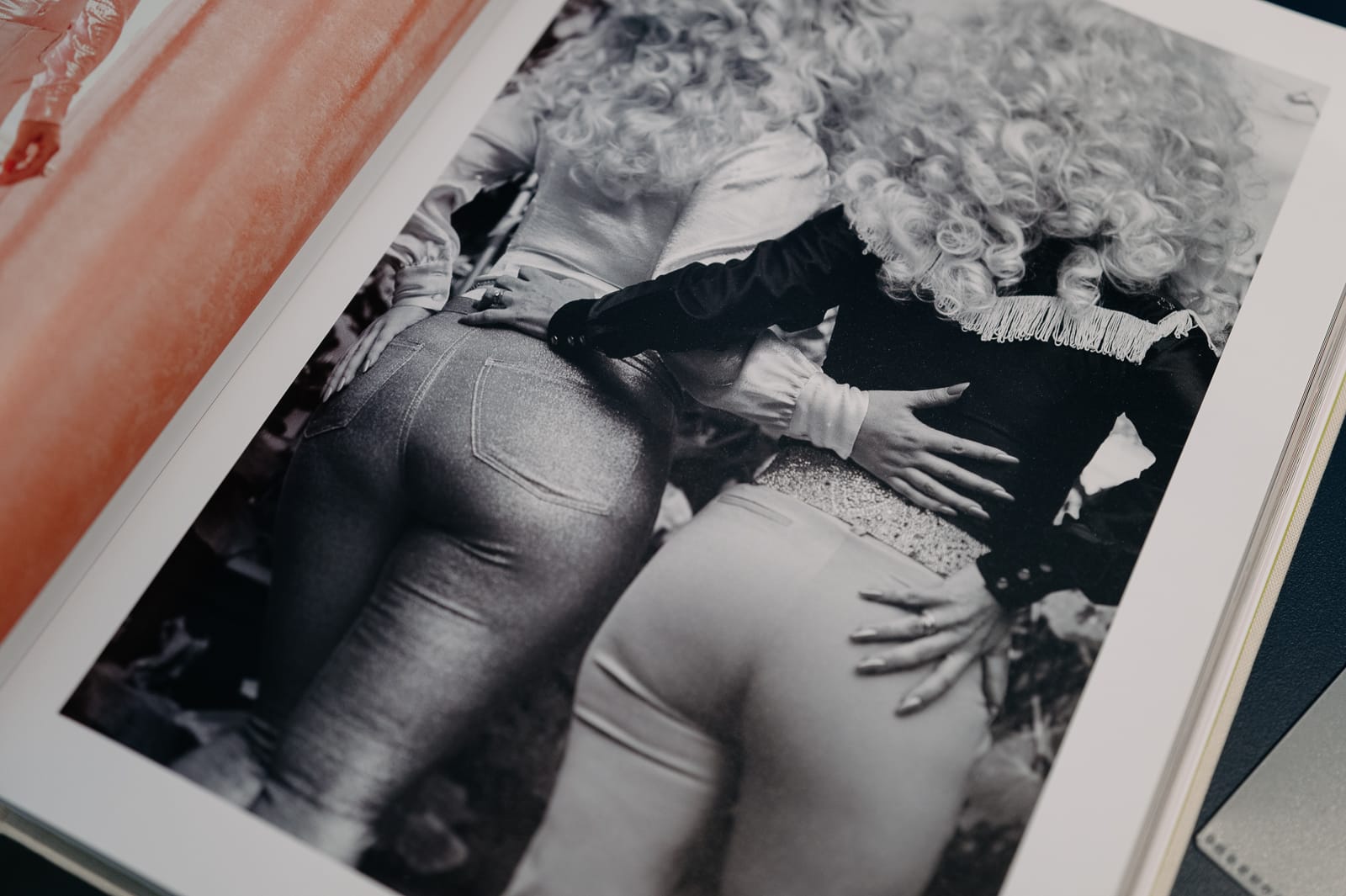
I supported the launch of a book by the artist/photographer Alice Hawkins a few years ago which investigated how Dolly dismantled stereotypes surrounding class and female representations through the singer's music and appearance. Dolly's 'Backwoods Barbie' aesthetic and persona is layered and represent a working-class consciousness. The book explores this notion in some depth over a 10 year span where Hawkins appropriates the imagery and guises employed by Dolly and attends fan conventions, Dollywood and meets Dolly herself. Copies are still available at Baron Books.
Dolly achieved so many great things, but beyond her musical talent, the Imagination Library is arguably her most enduring contribution. 330 million books to children and counting. In lieu of flowers, her family has requested that any money that may contribute to a show of appreciation be donated to the library. I believe every hosting server crashed under load within hours of announcing her death.
I was reminded of something that Rashad Shabazz wrote in his book 'Prince's Minneapolis' - it takes 100 years to make a Prince Rogers Nelson. Prince was a product of the civic infrastructure and foresight of Minneapolis in not only providing free instruments but embedding music education in public schools. These foundations are being neglected, and now with generative AI, artistic creation is devolving into commoditised, derivative slop. Creativity is a uniquely human form of expression and to derive it from stochastic models will never render the emotion and authenticity of an original work. But if the next generation don't have access to musical instruments and education, how do you inspire the next Dolly?
Radiolabs produced a podcast series entitled 'Dolly Parton's America' - it's seven years old now but is no less relevant or interesting for it. Dolly may have been the only thing that America could agree on and she represented the best of what America can be.


