
The annual World Press Photo Contest recognises and honours the best photojournalism and documentary photography produced over the past year. The photographers showcased document the defining events of our time and connect audiences to perspectives we might not otherwise encounter.
In truth, I've never been particularly comfortable with the notion of a subjective beauty parade that constitutes a photographic contest, particularly when it comes to the documentary genre. Incentivising the spectacle of someone else's suffering and atomising photography of complex, multi-faceted issues into a single, arresting frame has always felt like a disservice. Subject consent, dignity and the afterlife of the picture are all too frequently treated as externalities.
Documentary photography also distinguishes the idea of bearing witness from producing 'content'. Documentary work is a form of evidence and testimony. It's not algorithmically driven with a view to some form of monetisation.
I recognise that these exhibitions also play an important role in being a counterweight to billionaire media proprietor interests. They help set and police ethical norms and ultimately defend the worth of documentary photography. Exhibitions like this carry global reach that extends beyond national gatekeepers and ensures that important images circumvent single market control or political censorship. As a consequence, they are able to amplify suppressed or neglected regions and voices, and in so doing, they validate the lives and experiences of the people featured in the work.
But the tragedy of success in a documentary genre award is that the more harrowing an image of someone else's worst day, the better it competes. While it is tragic and necessary that these images exist, the real ethical question is what we choose to do with the attention these images demand.
I always try and attend the exhibition, and this holds true for most exhibitions where the curation and spatial dramaturgy make the experience distinct from the linear experience of a book or an untethered scroll on a phone.
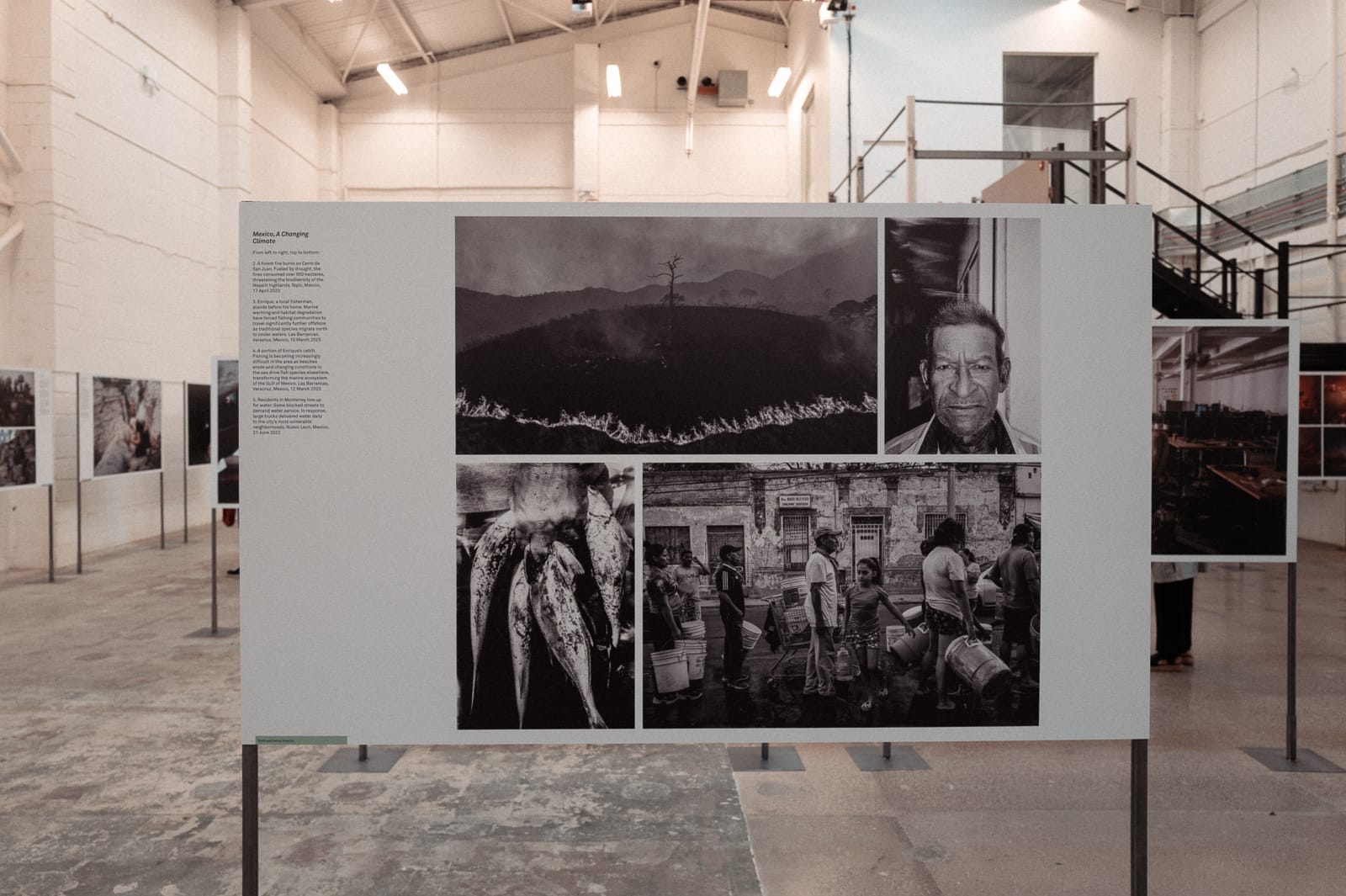
The physical relationship to an image changes in an exhibition – screens normalise everything to approximately the same rectangle, or a book to the physical dimensions of the page size. There is something immersive and unique about a mural-scale image that engulfs your field of view with almost no distraction. That decision is part of the work and helps to build empathy. Consider the reflexive body language of the visitors in my image below. Their postures indicate contemplation and reflection. Nobody is swiping away or scrolling. They are committed to looking in a way that screens actively erode.
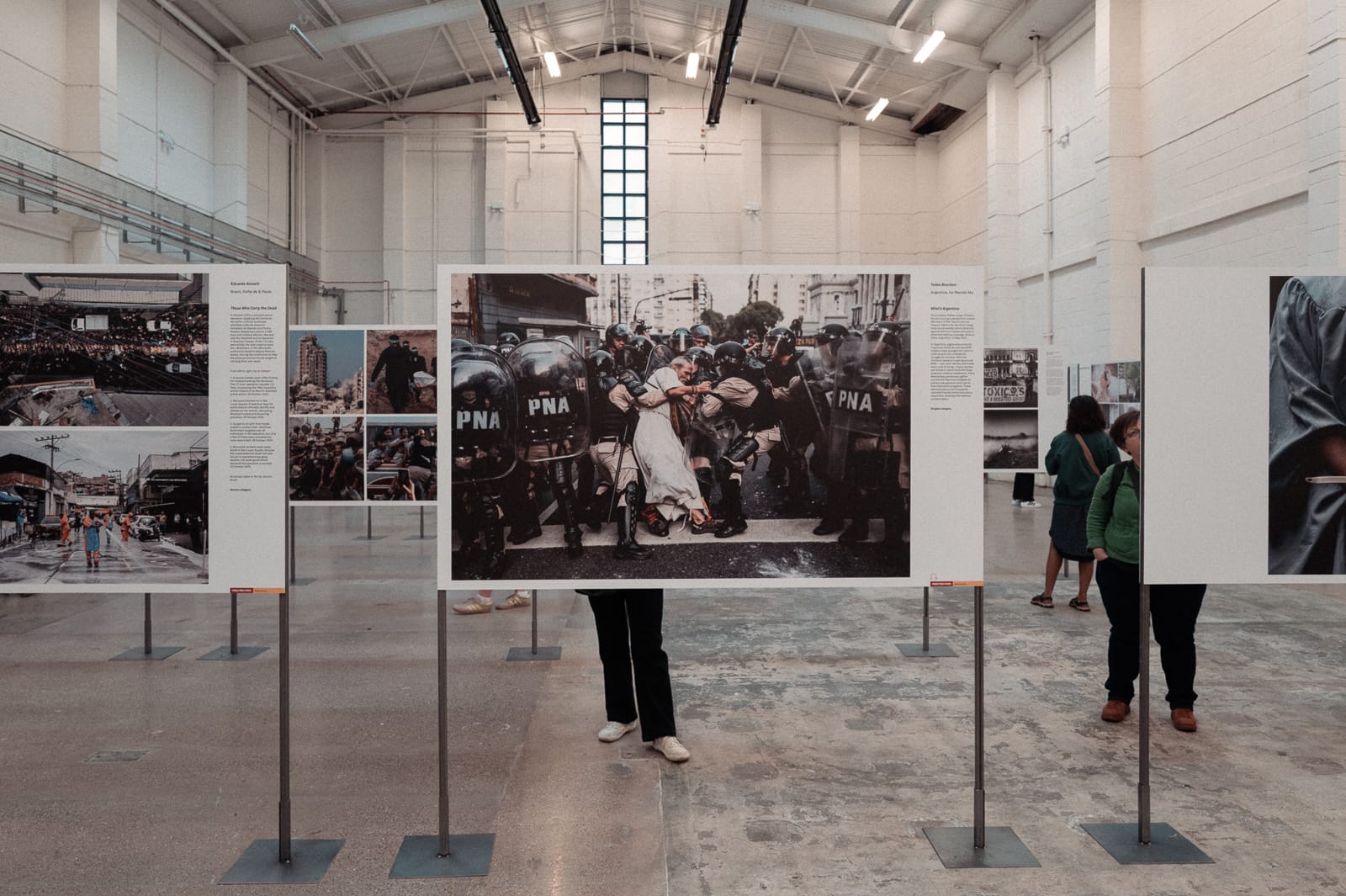
The World Press Photo images are available online, but screens for the most part are emissive, and colour is largely uncalibrated and will vary by device. I have a colour-calibrated workflow and soft-proofing setup, so I sit in a small, professional minority. But there remains a fundamental perceptual difference. On uncalibrated devices, the tonal register of an image can collapse, and you can quickly lose the nuance of deep shadows together with the refinement and delicacy of highlights at the opposite end of the histogram. Jan Sonnenmair's Portland Protests is a good example of extremes in an exposure which can compromise the appreciation of the image. Scale also reveals detail that may otherwise be missed.
Finally, there is the surface of the media – a made object. You're not viewing a signal. Tangible differences exist between gelatin silver, platinum, dye sublimation or matt inkjet prints. The sheen, the tooth, the depth of the blacks. All decisions and nuance which contribute to the experience and are presentation choices unavailable on a screen. The imprimatur of a print still carries weight and permanence.
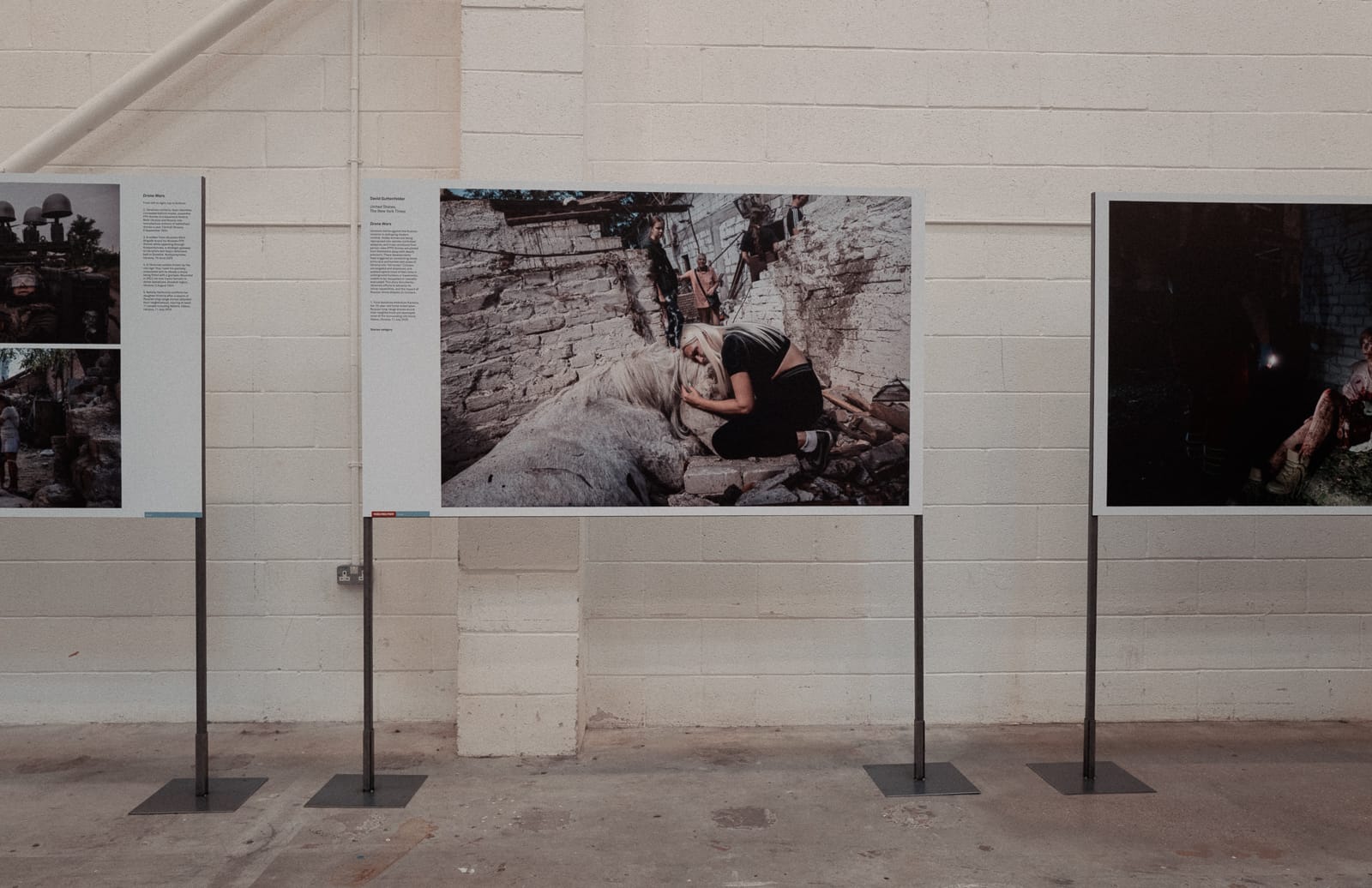
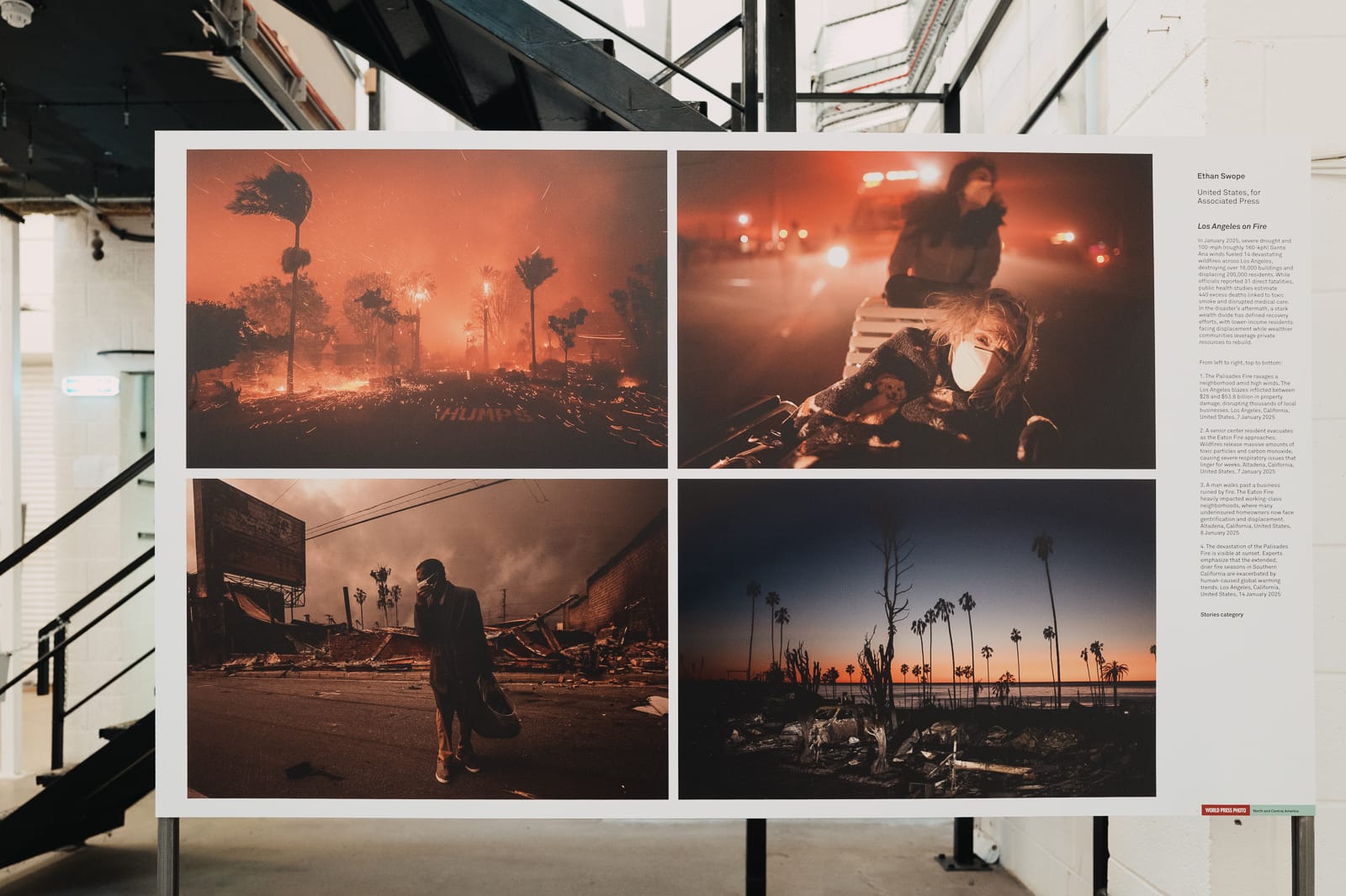
Press freedom is under considerable threat and declining in substantial parts of the world. It matters more than ever and can't be assumed or taken for granted. Reporters without Borders (RSF) ranks press freedoms in 42 countries as 'very serious'.
2025 was one of the deadliest years for the profession with at least 93 journalists killed while carrying out their work across 15 countries. More than half of these journalists were killed in Palestine.
Public trust in information is being continuously eroded and undermined through misinformation, disinformation and even more so when supported with synthetic media. Visual journalism is in the public interest and cuts across language far more effectively and quickly than the written word.
While the statistics above align with the content of the exhibition, it's worth mentioning that RSF's 2026 Index already presents a bleaker picture - what the organisation now calls a 25-year low. More than half the world's countries rated "difficult" or "very serious" for the first time in the Index's history. It is difficult to know where this year will end given the US administration has banned CNN, MSNow and Politico from the White House.
The exhibition is touring now, and World Press Photo's site shows the touring locations and cities. Go and stand in front of the work.
Footnote
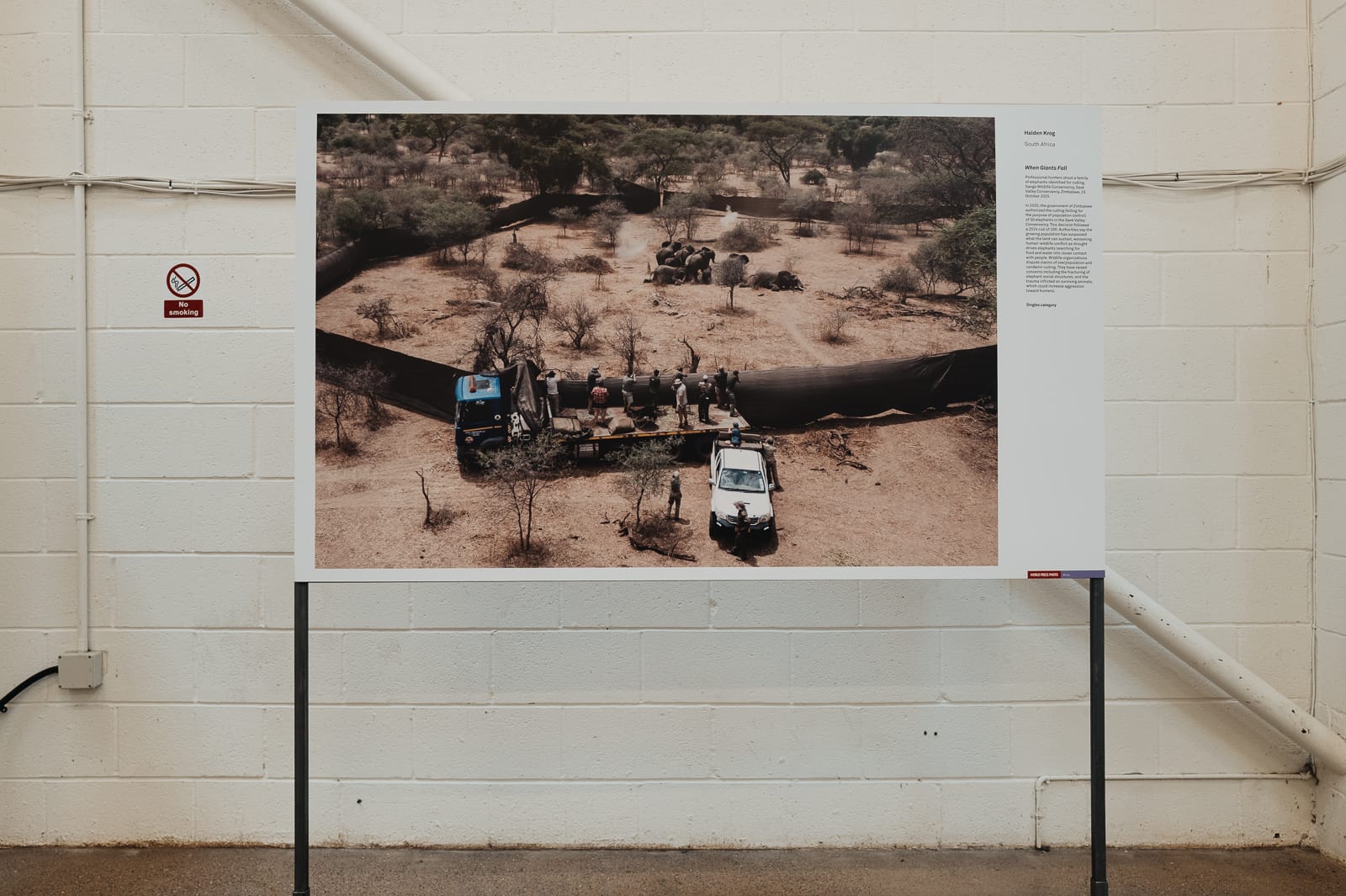
Out of curiosity, I used Claude to dig into something I'd been wondering about: having noticed a few aerial shots in the competition, I wanted to know how many of the winning images were captured with drones. Two in particular — Polar Bear on Sperm Whale and When Giants Fall — simply wouldn't exist without them. DJI's ownership of Hasselblad and its work on aerial platforms have opened up genuinely new perspectives, in the truest sense of the word.
Much as I hold to the idea that photography isn't just about the camera, there's no escaping the fact that advances from manufacturers have delivered real gains in quality and usability. Gear matters absolutely up to a threshold - a lens that can't reach or a sensor that can't resolve detail in low light will lose the shot no matter who's holding it. Beyond those thresholds, the eye matters most.
- Canon - 12 entries, with the EOS R5 Mark II the single most-used body (5 winners).
- Sony - 11 entries (A1, A7 IV, A7R V, A9, A9 III, RX100 IV).
- Nikon - 10 entries, the Z 8 the most-used Nikon (4 winners, plus the Photo of the Year).
- Fujifilm - 3 (X-T2, X-T3, X100F);
- Leica - 1 (SL2)
- DJI / Hasselblad drones - 3.
- Camera not listed - 6 entries.


