
I'm a member of the National Portrait Gallery, it's a decision driven by the simple economics of attending two exhibitions in any given year of membership. It provides a behavioural nudge to make sure I take advantage of the membership. That said, a fringe benefit is Larry's Bar - the member only bar situated in the historic vaults. Service has been consistently excellent in all of my visits and their Tiramisu is outstanding. It's far more peaceable than a frenetic coffee shop or the heavily touristed areas that surround it if you ever have need for a quiet and far more inspiring place to work. But I digress.
The last exhibition at NPG I went to was Cecil Beaton and I was going to pass on this exhibition. The notion of celebrity and objectification of an ordinary person has never held any appeal. Commemorating a celebrity who died 64 years ago, irrespective of their cultural resonance could easily be deemed as opportunistic and populist. Marilyn has been dead nearly twice as long as she ever lived after all.
What interested me is the period of history that Marilyn occupied and the parallel development of photography, not only in the tools but perception and consumption of the medium. The photographers who contributed to the exhibition read like a canon of the age - Halsman, Avedon, Beaton, Arnold, Stern.
From a technical perspective, I always see tremendous value in viewing prints made in period as they will have been made by or under the photographer's supervision. Prints made later from original negatives, particularly given the variables of chemistry and darkroom printing are ultimately subjective interpretations. In a developing medium, nobody was designing for longevity - the durability and stability of early prints from this period predates the very idea of archival printing.
When Norma Jeane Mortenson was born in 1926, the tools that would later make her image ubiquitous had only just appeared. Her life brackets the period in which photography became the medium through which the modern world saw itself. Marilyn wasn't just photographed during this period, she became an object of fixation and intrigue for both men and women.
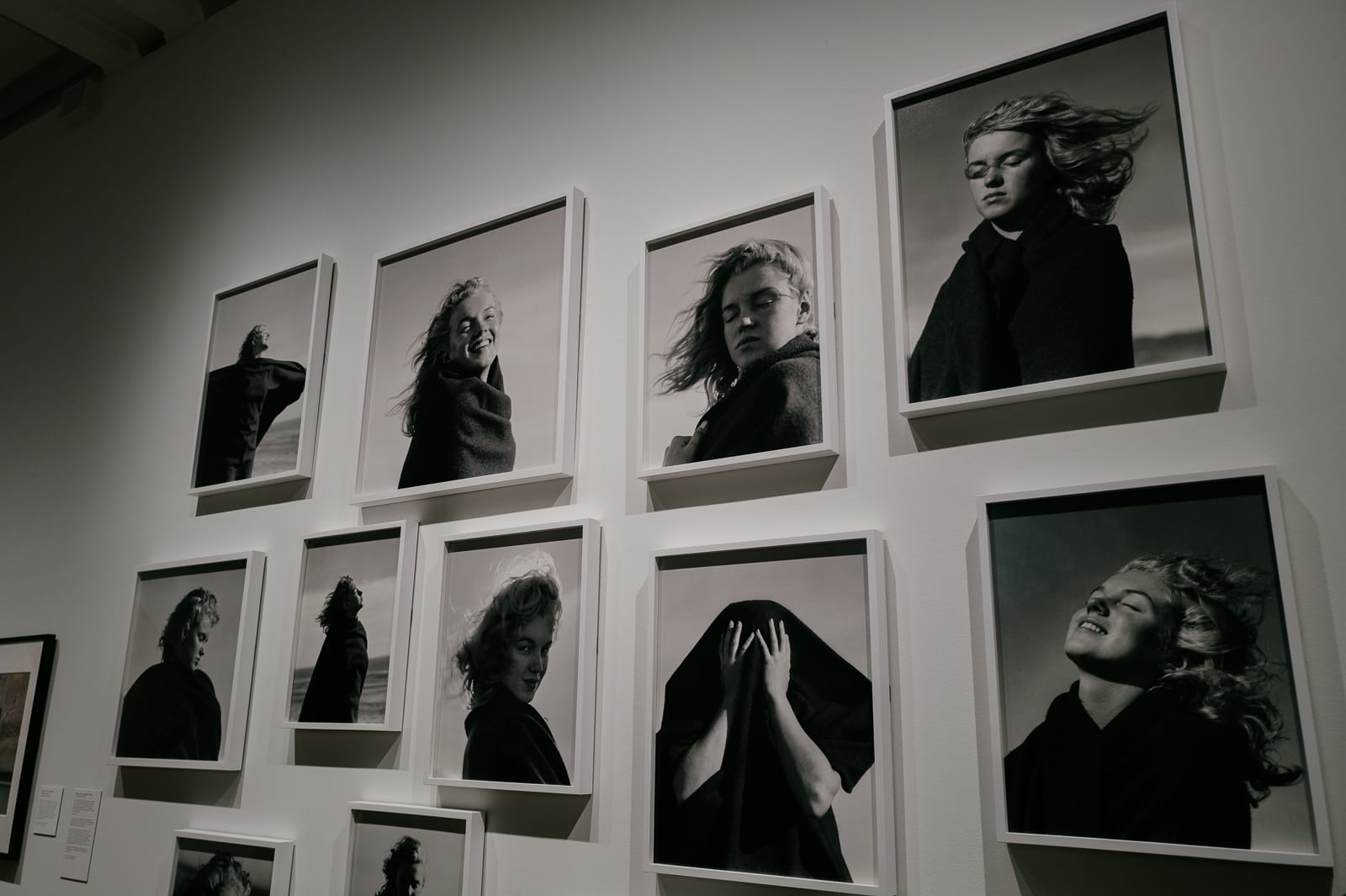
While difficult to quantify in absolute terms, to this day, she remains one of the most photographed people of all time. I'm not sure who holds that title but speaking of titles, I would be unsurprised if that 'accolade' belongs to Queen Elizabeth II.
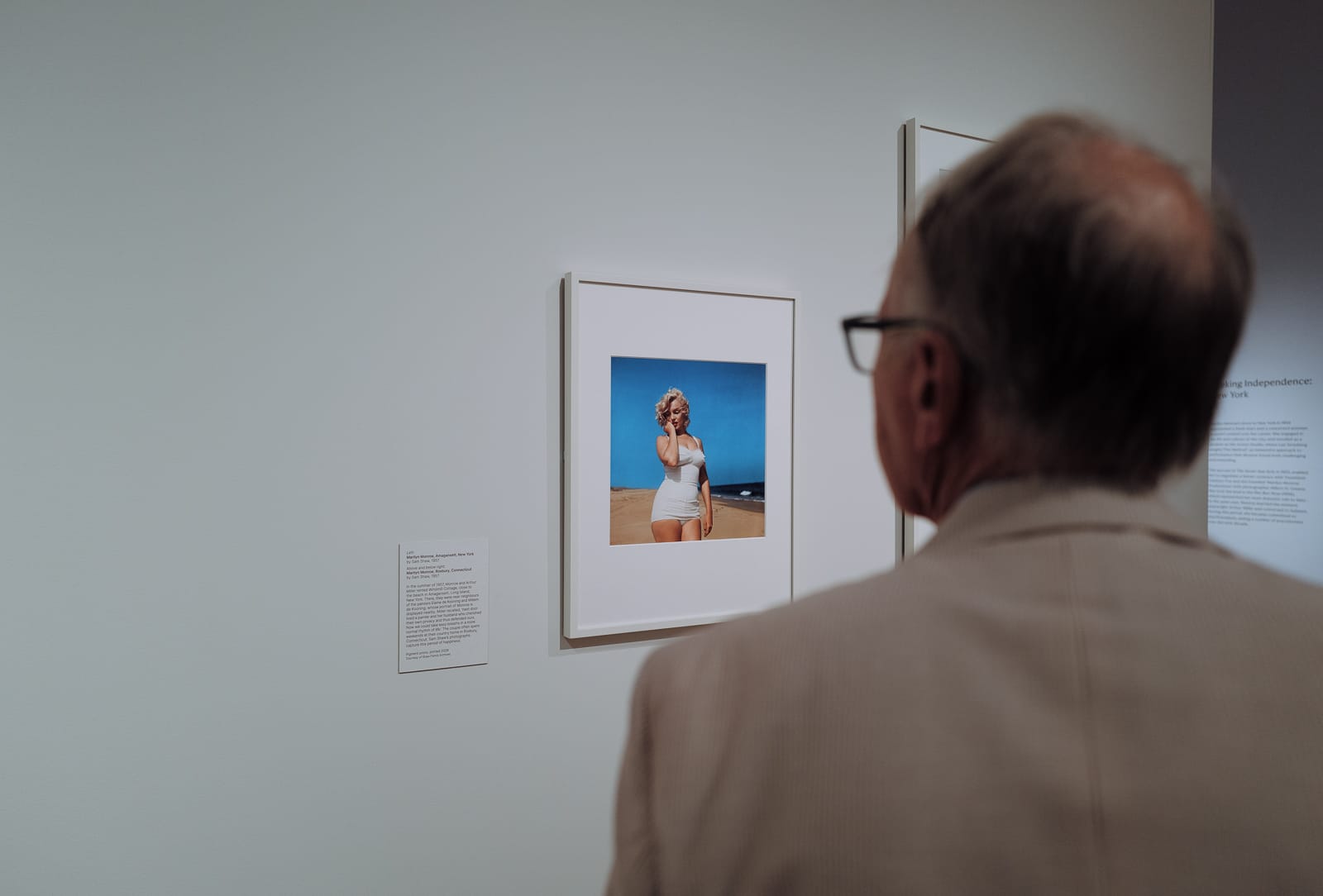
In the early part of Marilyn's life, photography was still dominated (and burdened) by cumbersome and slow, tripod-bound view cameras. The idea that a photographer could move with freedom, candidly and without the tether of a tripod was revolutionary and novel. The Rolleiflex twin-lens reflex arrived in 1929, when Marilyn was three. By the time she was a girl, the technical foundations of the mid-century image were almost in place.
Her adolescence coincided with two consequential developments. In 1935–36, Kodak released Kodachrome and Agfa released Agfacolor film emulsions. Although it would take nearly two decades to standardise their use, the aesthetic of these films is present in many of the pictures displayed in the exhibition. In November 1936, Henry Luce launched Life, inventing the American picture magazine and ushered in the machinery of celebrity-by-photograph. By contrast, Farm Security Administration photographers like Dorothea Lange were bearing witness to the Great Depression. The symbolic image of Migrant Mother dates from 1936. The two poles of photography were being defined in the same years.
Marilyn's ascent through the late 1940s and 1950s tracked photography's own golden age. Magnum Photos was founded in 1947 by Cartier-Bresson, Capa, Rodger and Seymour, establishing the photographer as author and witness. Polaroid's instant Land Camera then appeared in 1948. Cartier-Bresson codified "the decisive moment" in 1952, the same year Monroe made her first Life cover, photographed by Philippe Halsman. In 1953, two things converged: Marilyn gained recognition as a genuine star with Gentlemen Prefer Blondes, and Playboy launched its first issue with her as the centrefold - using a nude Tom Kelley had shot in 1949, when she was unknown and needed the money.
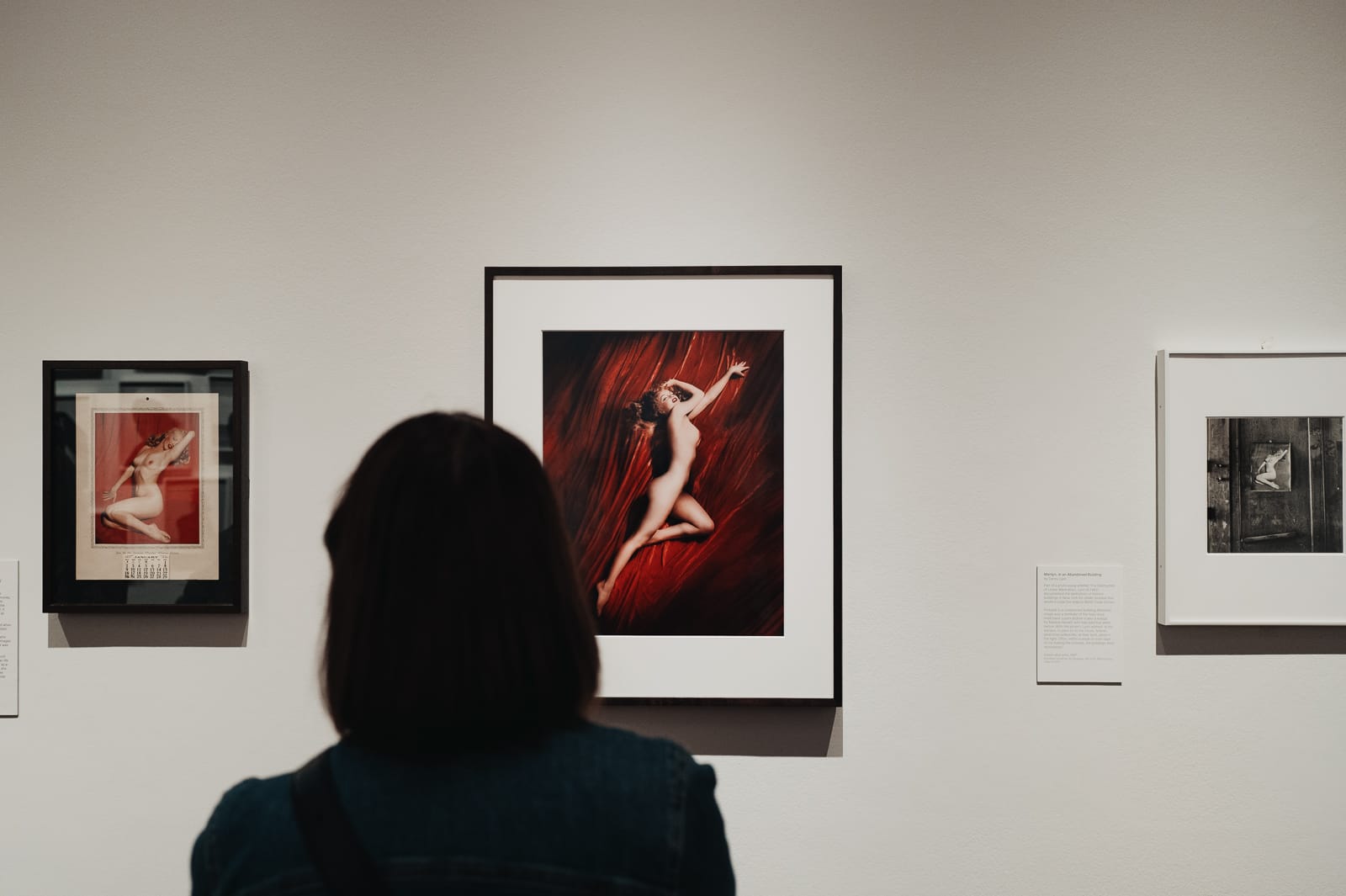
Then came the picture that fused her with the medium permanently. In September 1954, Sam Shaw photographed her standing over a subway grate for The Seven Year Itch. Arguably the single most reproduced photograph of the decade. This marked a transition point when some of the era's finest photographers began to shoot her.
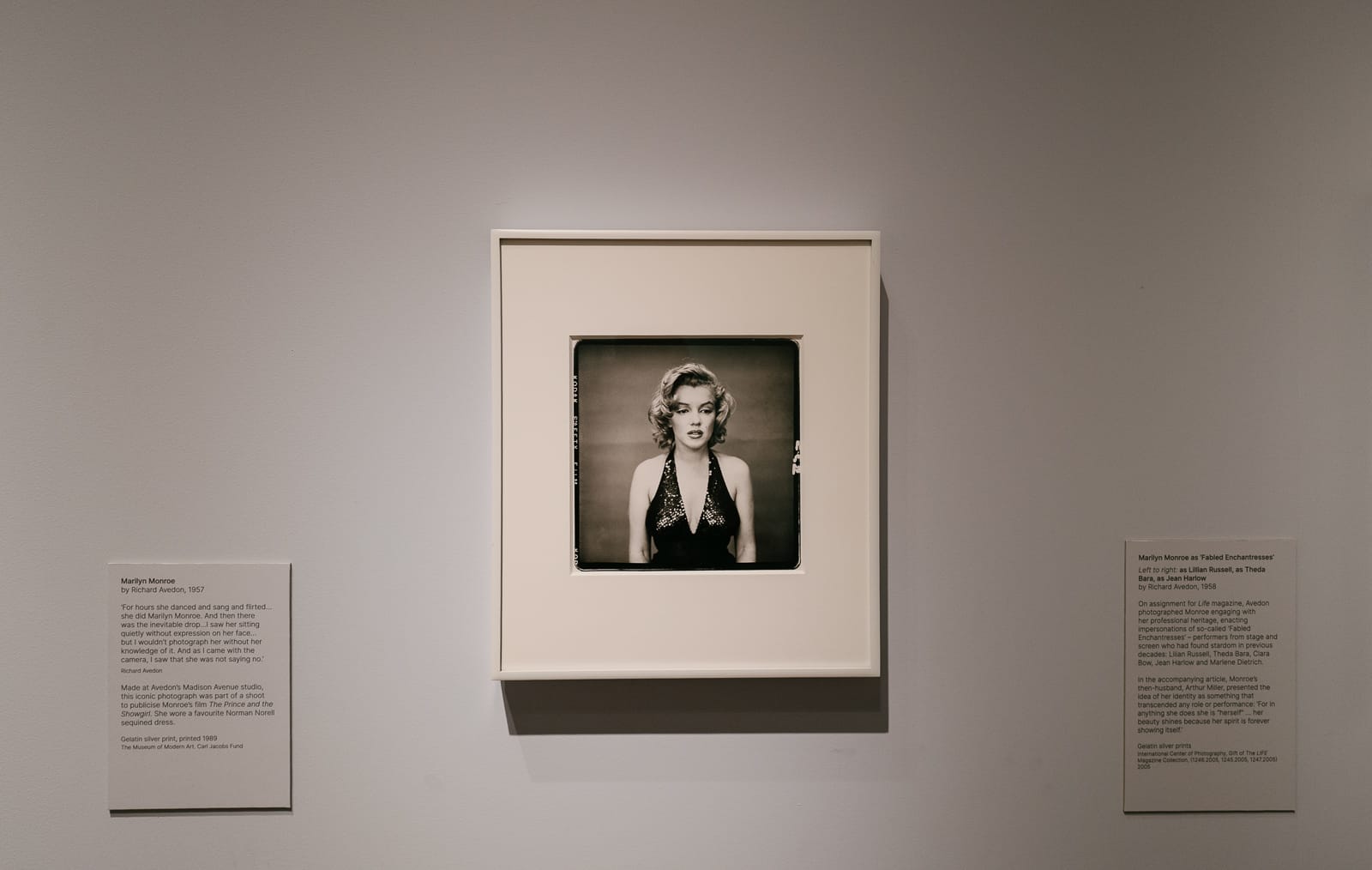
Cecil Beaton photographed her in 1956. Richard Avedon made his post-performance study in 1957 and, in 1958, the celebrated Life series in which she impersonated the great screen sirens of the past. Eve Arnold, built a years-long working relationship with her, culminating on the set of The Misfits in 1960, where Inge Morath and Ernst Haas were also shooting - Morath would soon marry Monroe's then-husband, Arthur Miller. Halsman caught her mid-air for his 1959 Jump book.
Robert Frank shot The Americans in 1955–56. William Klein's confrontational New York appeared in 1956. Fashion, meanwhile, was becoming an art form under Richard Avedon and Irving Penn. Monroe sat at the intersection of it all - glamour, celebrity, fashion, and the emerging idea of the photographer as serious artist.
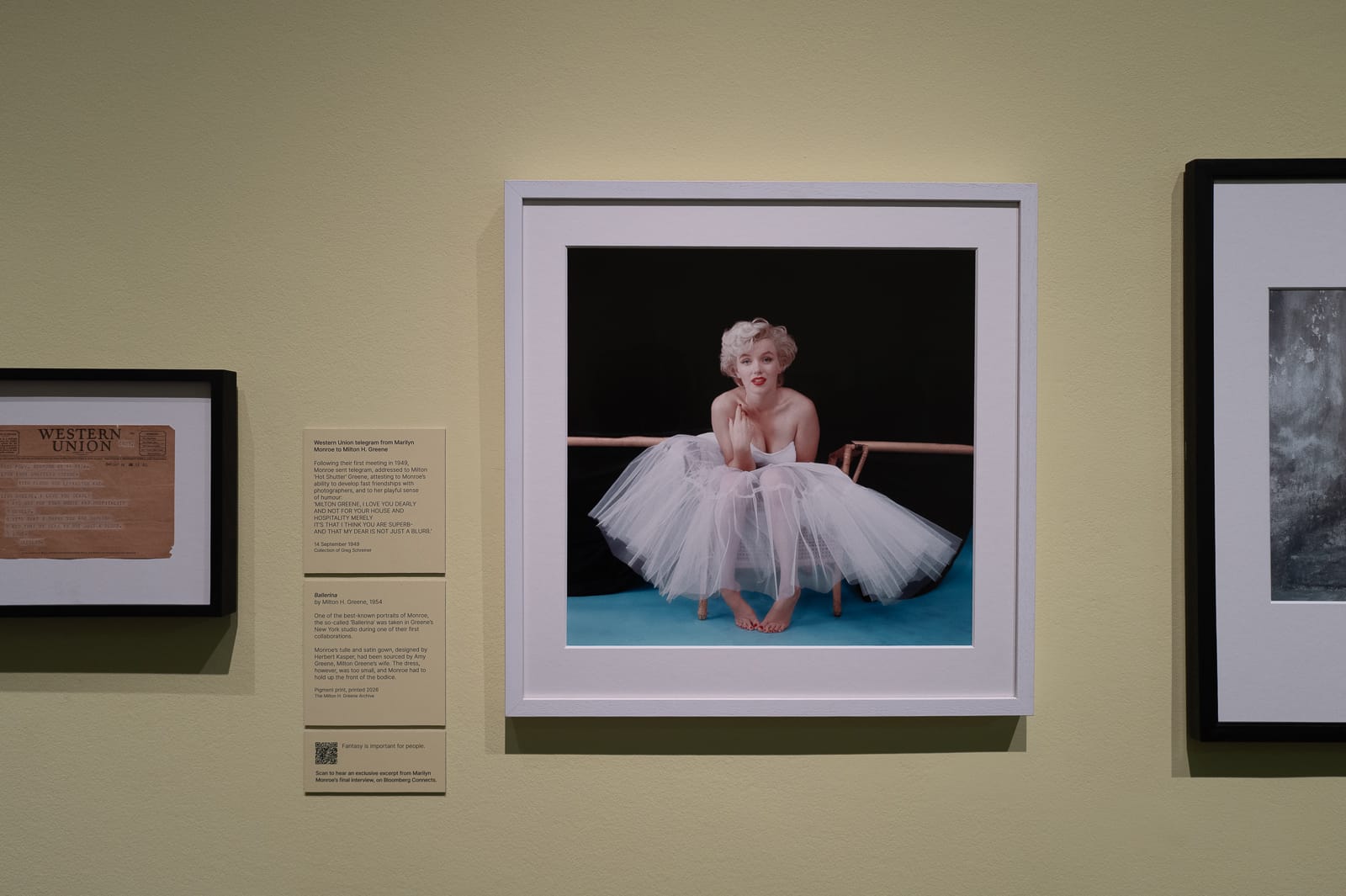
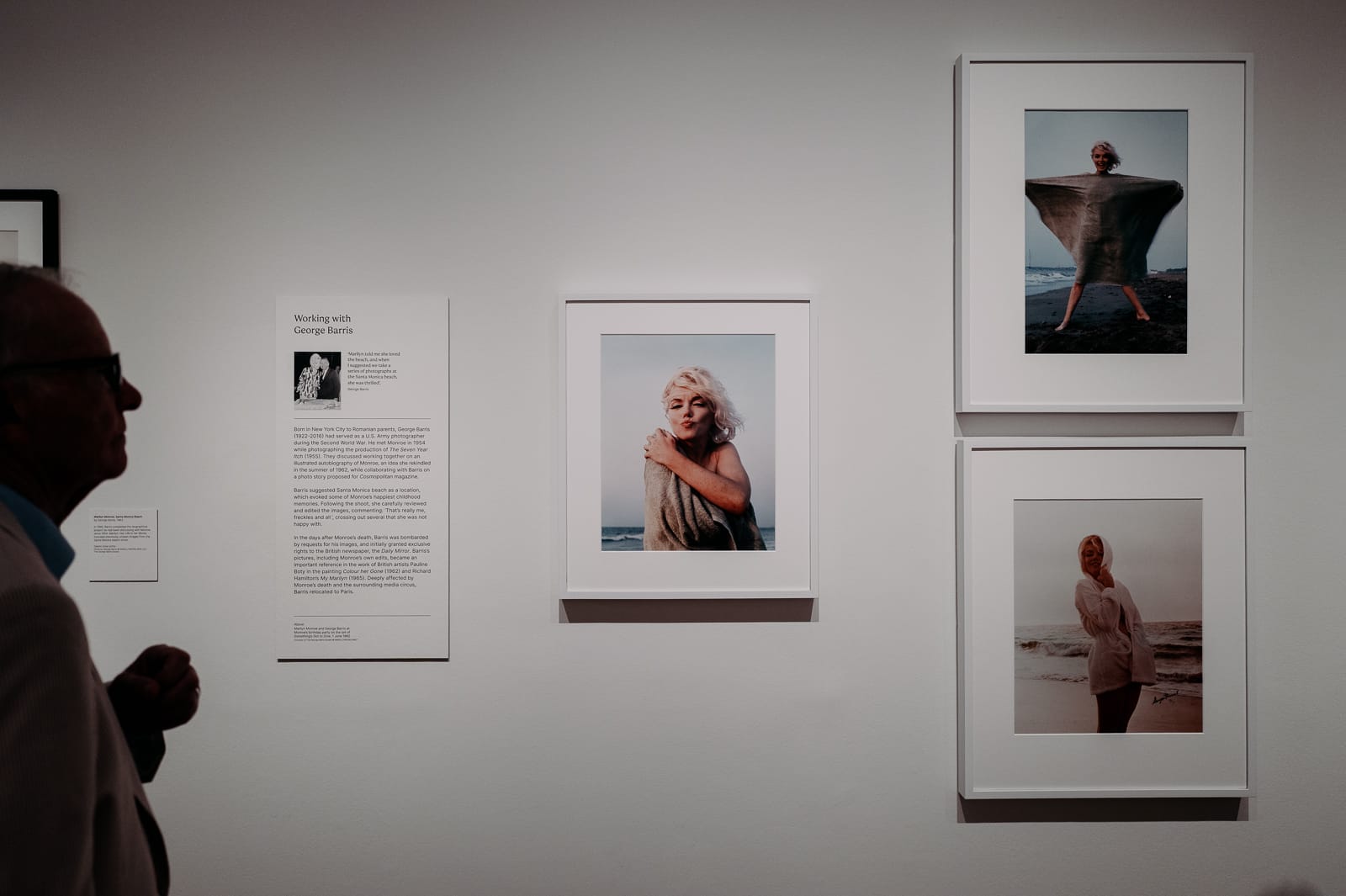
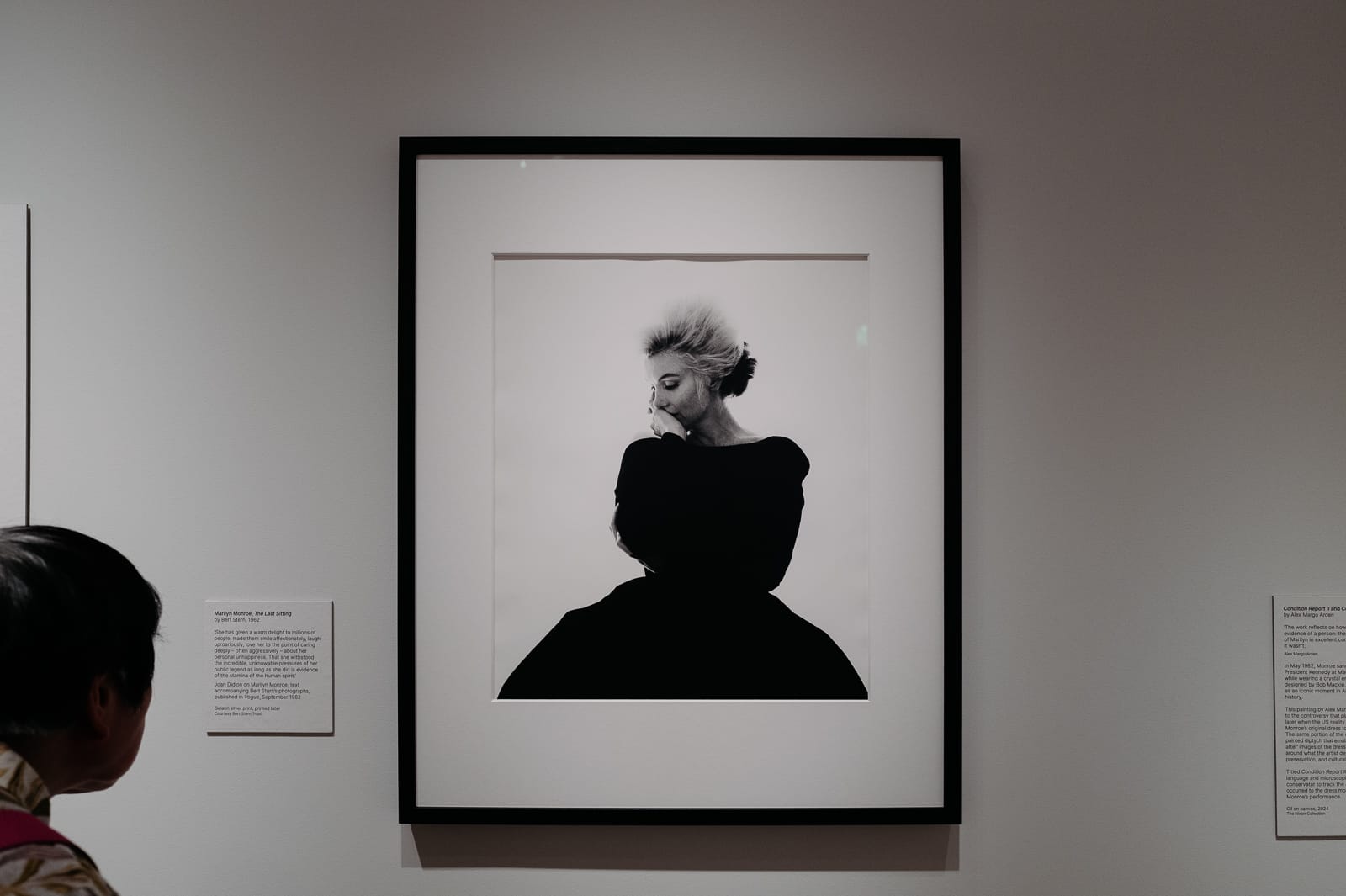
In late 1961 Douglas Kirkland photographed her for Look; in the summer of 1962 George Barris made relaxed beach portraits at Santa Monica. And in June 1962, six weeks before her death, Bert Stern shot what became known as The Last Sitting — three days at the Hotel Bel-Air for Vogue, over 2,500 frames, some of which she famously scratched out on the contact sheets herself, still trying to control her own image to the very end.
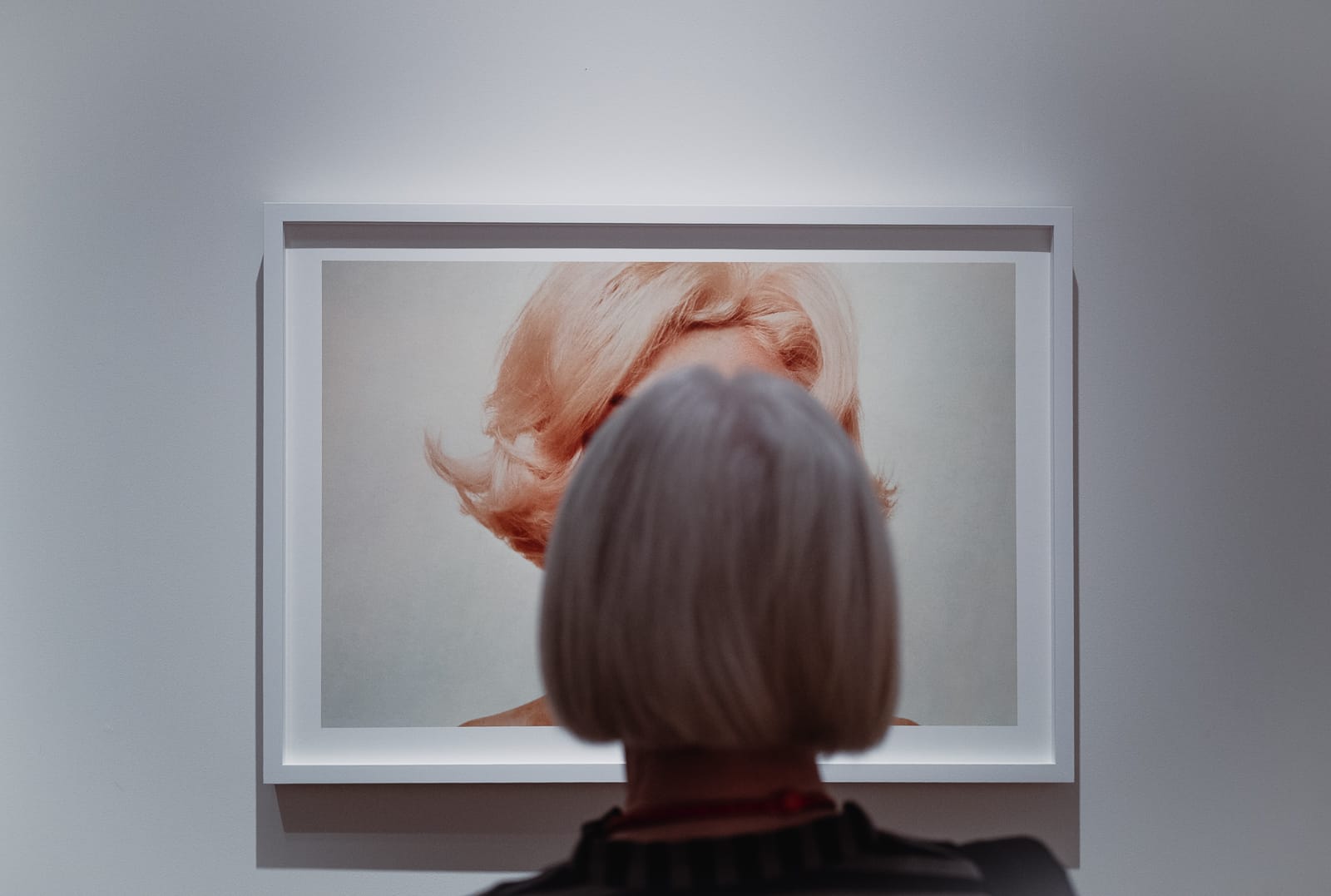
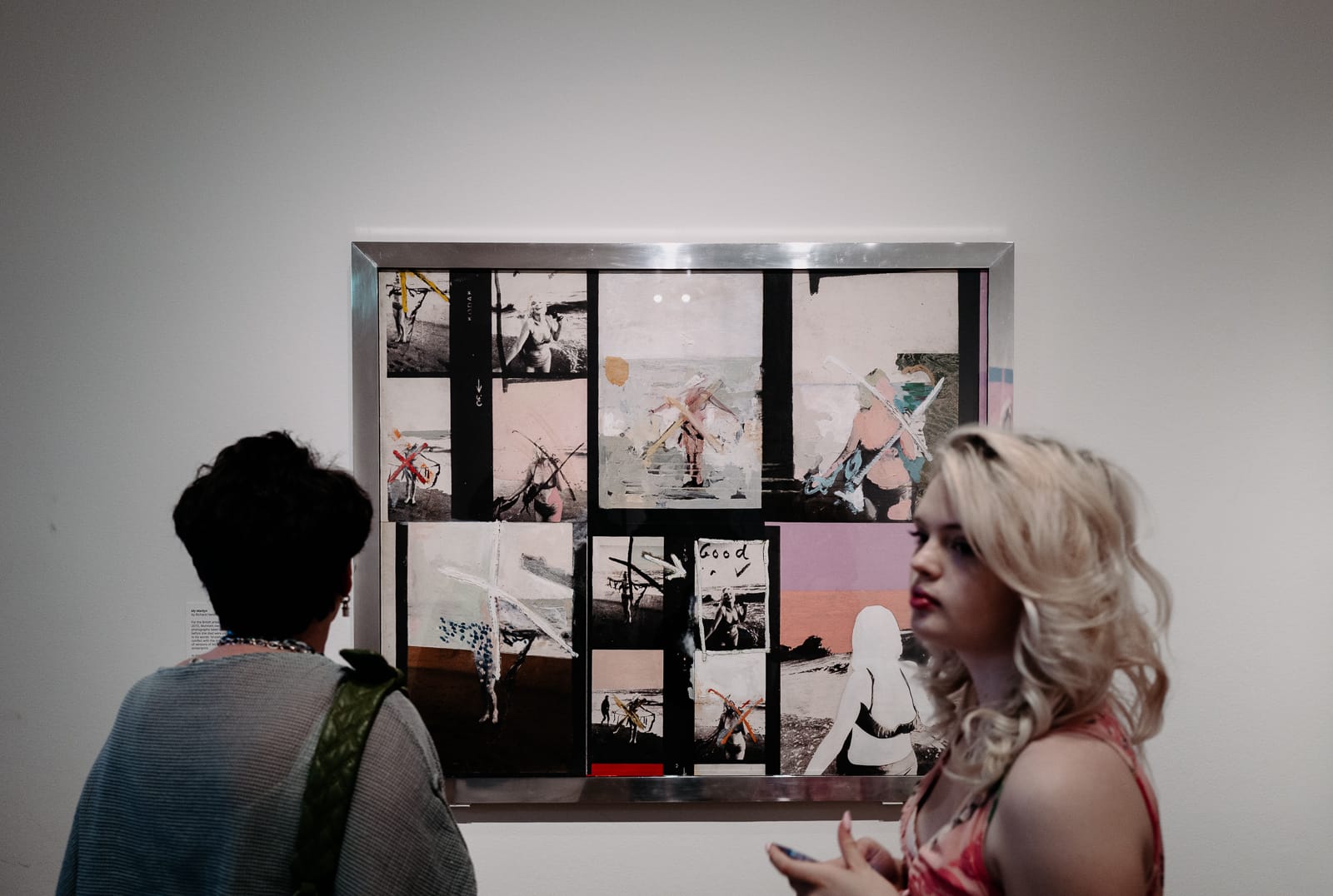
So I was won over, though not by her. The exhibition is presented as a portrait of Marilyn but to me, it's really a portrait of the apparatus that produced her. She was its subject and, increasingly, its captive. That tension is the exhibition's real subject, whether or not it means to be.


