The Climate Change Committee published its fourth assessment of UK climate risk a matter of weeks ago and a couple of selected excerpts:
"The impacts of ongoing climate change are increasingly visible in the UK. In summer 2022, unprecedented high temperatures, including record-breaking 40°C heat"
"The impacts seen in the past few years, with swings between dry to wet periods, show that the UK remains inadequately prepared for the weather extremes already being experienced, let alone those coming in the future"
It's both sobering and unsurprising, and I have been considering climate adaptation strategies in our own garden for the best part of the last decade. Notwithstanding the fact that our property is set on heavy clay which offers a diggable window of 9 days a year, outside of which the soil varies between glutinous, adhesive slop or concrete. That is to say, I've always planted with a degree of measured consideration. That said the moisture-retentive nature of clay means we will be buffered to a degree.
Beth Chatto embraced the principle of 'right plant, right place'. If you have ever done any gardening or ritualistically killed house plants by not making sufficient adaptation for a household environment, this ethos will resonate.
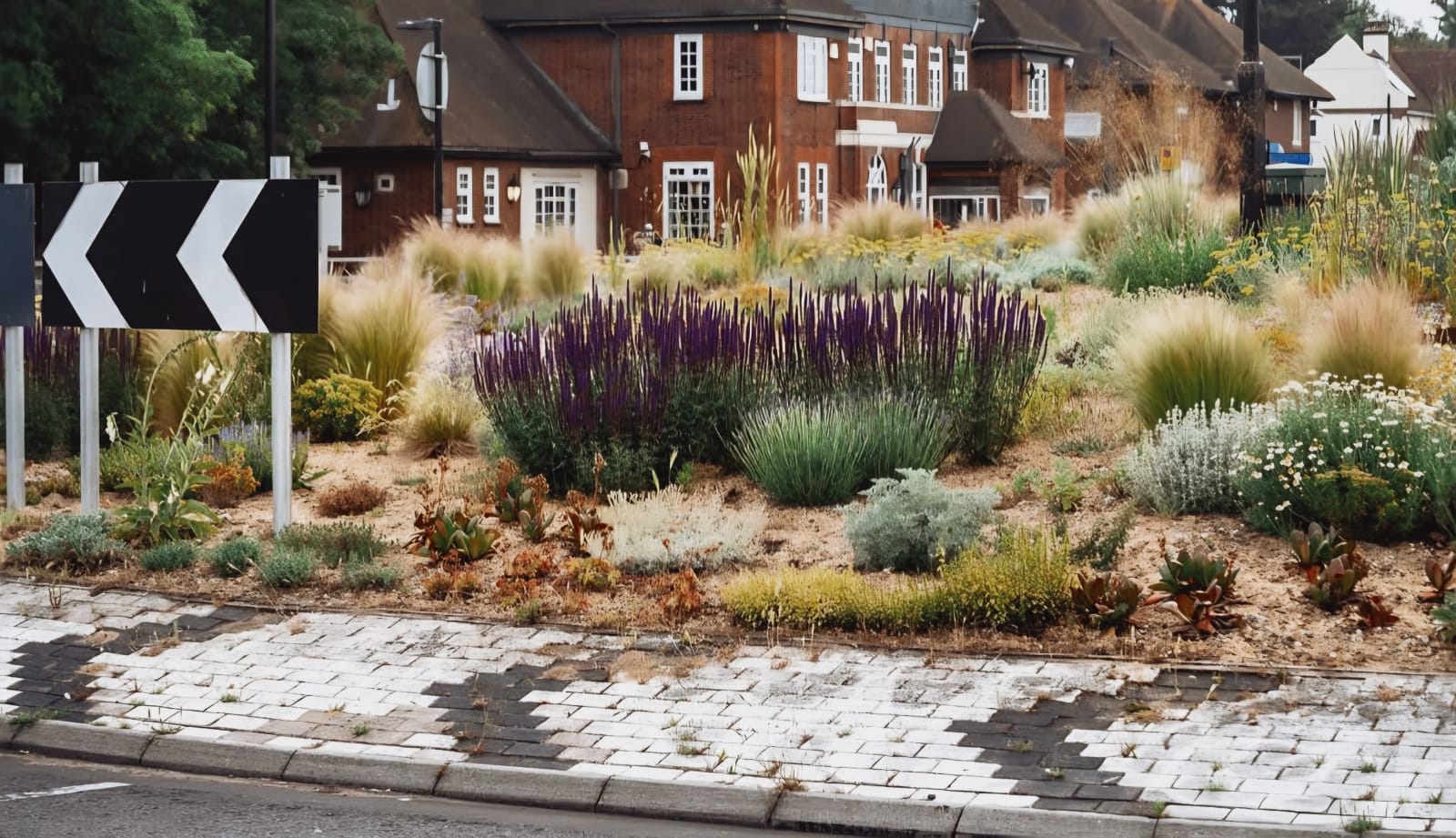
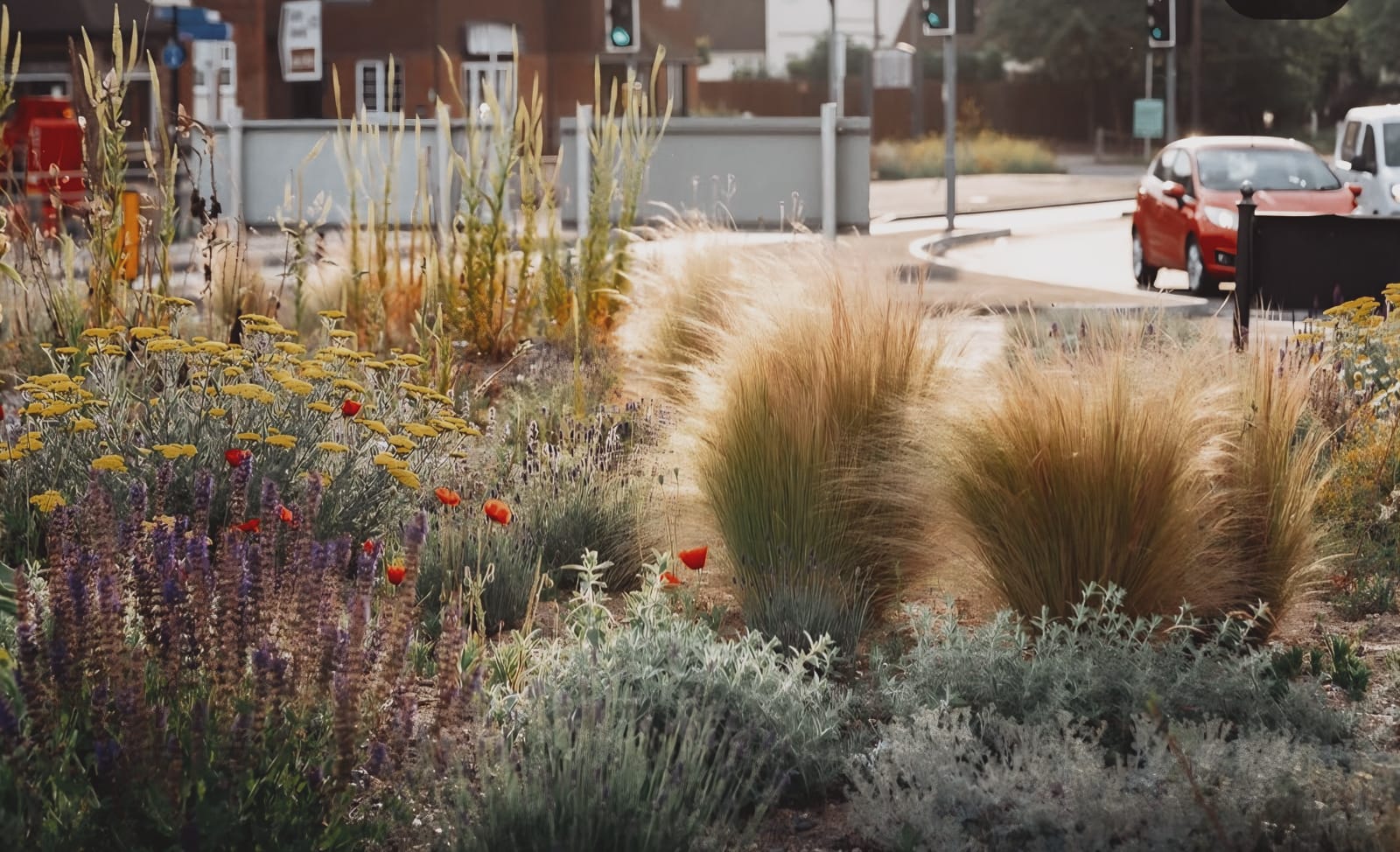
In terms of a case study for how urban adaptation could be applied, Colchester City Council commissioned Beth Chatto Gardens to design a planting scheme for the Albert roundabout, a prominent feature found along the walk from the train station into the city.
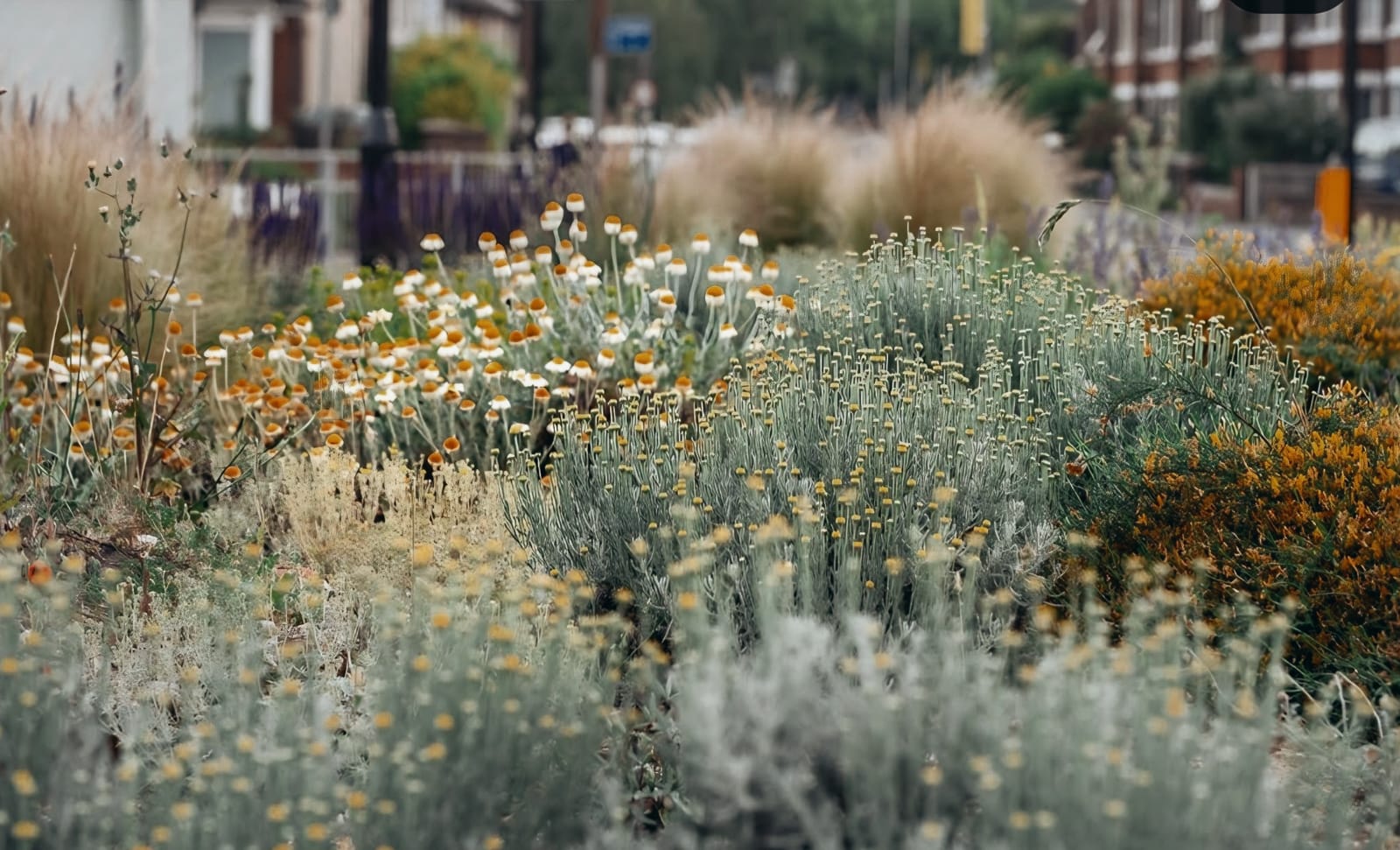
Albert Roundabout in Colchester, Essex, features a sustainable, biodiverse planting scheme and it's an exemplar of thoughtful planting and consideration of biodiversity in what would seem to be an unlikely space. Resilient plants (a full planting list is at the foot of this post) were chosen and ensures that they provide year round interest and ecological value. Building waste and spent plant materials have also been incorporated to create habitat - nesting, sheltering and overwintering for insects and other invertebrates.
The garden is the most honest unit of adaptation there is. It tells you very quickly when you're wrong. The Albert roundabout isn't sophisticated engineering, though; it's attention. Beth Chatto understood the concept of adaptation decades ago, so when the report says that we're inadequately prepared, it isn't really a knowledge issue. We know what to do. We've known for years. We just keep planting against instead of with, be that in a border, a roundabout or across a country. The roundabout might jar with Blake's 'green and pleasant land', but it's an honest reflection of the world we live in.