
AxS
Number 3
African conservation has been front of mind this week.
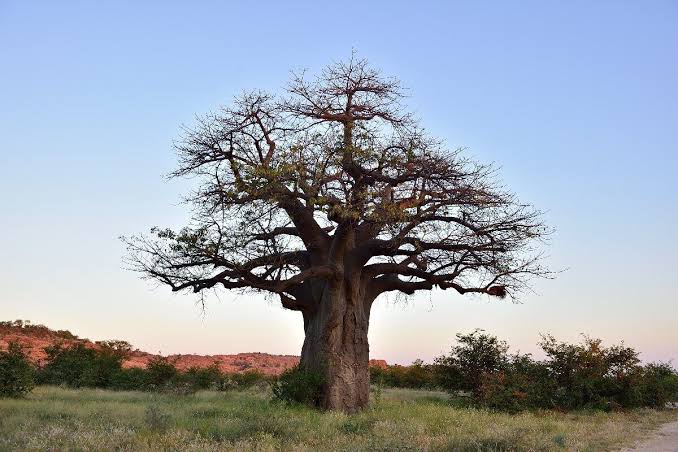
The seizure of five protected Baobabs bound for Georgia ignites conversations about Africa’s trade in living trees and highlights the need for more robust regulation. An export permit alone is insufficient in quantifying the shift in economic and ecological value away from the communities and ecosystems where it has accumulated over hundreds of years.
The seizure comes as South Africa presses for tougher international enforcement. On Oct. 23, parties to the United Nations Convention against Transnational Organized Crime, meeting in Vienna, voted 83 to 12, with 27 abstentions, to begin negotiating a new protocol on crimes that affect the environment, including trafficking in wild flora and fauna.
The South African investigation also follows a case in Kenya involving eight baobab trees removed from Kilifi County and exported to Georgia.
 Rose Nganga
Baboons have long been a source of human-wildlife conflict in Cape Town and the Cape Baboon Partnership was formed to help address the complex and unique challenge that the Cape Peninsula plays. The Cape Peninsula Baboon Management Action Plan 2025 is worth reading and offers considerably more scientific substance than mainstream media reporting. Part of the management plan has been implemented this week and the Waterfall Troop was relocated to a sanctuary amidst significant protest which was amplified online.
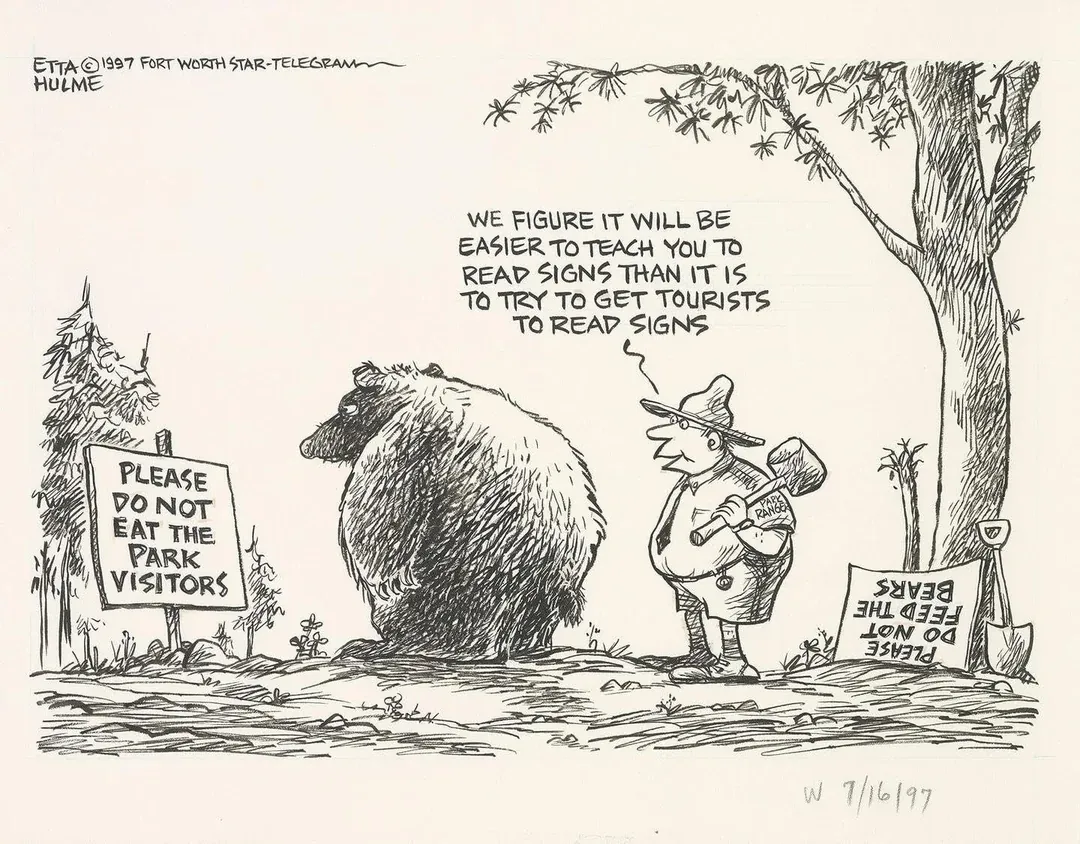
This represents a wicked problem and it shares much in common with the bin raiding Bears of Yosemite National Park. There is a well-loved anecdote reportedly attributed to a Yosemite park ranger - 'There is considerable overlap between the intelligence of the smartest bears and the dumbest tourists'.
Baboons are incredibly adaptable and intelligent primates. A useful summary of the complexity of the issue is available via The Daily Maverick.
The Chacma baboon (Papio ursinus ursinus) is indigenous to the Cape Peninsula and plays an important ecological role in supporting Cape Town’s rich biodiversity and fynbos biome. Throughout their sub-Saharan range, baboons prefer to use more productive, low-lying land for foraging, and high-lying areas such as cliffs and tall trees in which to roost. However, rural and urban development on the Peninsula has resulted in the transformation of significant portions of low-lying natural land into residential, commercial, industrial (i.e., urban) and/or agricultural (i.e., rural) landscapes, corresponding to a decline in the natural habitat available for baboons.
At the age of 21, Jeremy Bentham, 'spiritual founder' of UCL is thought to have been the first person on record to have legally registered his active preference for his body to be used by science after his death. UCL recently undertook CT scans of his head revealing that he would have suffered with toothache and arthritis of the jaw. This is documented in a new short film ‘Bentham Revealed’. It documents how the university undertook advanced CT scanning and 3D modelling of the thinker’s preserved head.
I'm also mildly amused to see that he was transported in a Really Useful Box - they are one of the most useful and near-infinitely stackable boxes for storage and have been invaluable for transporting my vast book collection.
John Berger (1926–2017) was an influential art critic and writer. He was best known for his seminal book Ways of Seeing (1972) but I feel this in some way diminishes the scale of the man but it's how I first encountered his work. The book changed how people talk about images and explores the governing ideas of power and ideology in visual imagery. He was contemporaneous to Susan Sontag (On Photography). Berger's publisher (Verso) hosted a conversation between them, available on Verso's site: To Tell a Story.
As it's Berger's centenary, a number of publications and exhibitions have been released. I missed the London Review of Books talk at Conway Hall (apparently it'll be on their video archive shortly) but in looking for a recording, I found a recorded talk from the British Library with Tom Overton and Gareth Evans. The book, John Berger: From Life, is available from Bookshop.org, and the recording, John Berger: From Life – with Tom Overton and Gareth Evans, is on YouTube.
Tom Overton catalogued John Berger’s archive at the British Library, and edited two volumes of his writing about art: Portraits and Landscapes, both published by Verso. He is currently an archive curator at the Barbican Centre in London.
A photographic display drawn from the John Berger Archive at the British Library is running in the main Entrance Hall Gallery from 28 August 2026 until 5 February 2027.
I read an interesting article in the New York Times - What the Retail Greeting ‘Welcome in’ Says About What Customers Really Want. Phatic expressions - verbal tokens traded to establish social relationships vary culturally but I'd like to believe that it's a cultural export from Germany (willkommen) not some naggingly superfluous artifice.
The Hinton lectures on AI alignment are available via the AI Safety Foundation website and are organised via day. They're on YouTube too but who wants to suffer through ads?
Dougie Wallace, also known as Glasweegee was featured in The Guardian's Art & Design section with his social documentary work: Ma Wee Tin O’Shortbreid. His commentary on The Guardian adds a tremendous amount to the appreciation of his work.
Ma Wee Tin o’ Shortbreid is a work in progress about tourism, national identity and the packaging of Scotland’s Highlands and Islands. The title comes from those old shortbread tins every Scottish family used for their photographs - the ones with a romantic Scotland on the lid: a castle, a Highland coo and permanent sunshine. Made on repeated camper van trips, it follows the visitors who come for that picture and the empty roads, and end up waiting for everyone else to shift out the frame. The pictures are about the gap between Scotland as advertised and the place people find.


