I spend a lot of time at the kitchen sink, far more than I'd like. Penance for a love of food, cooking and cast iron cookware ownership.
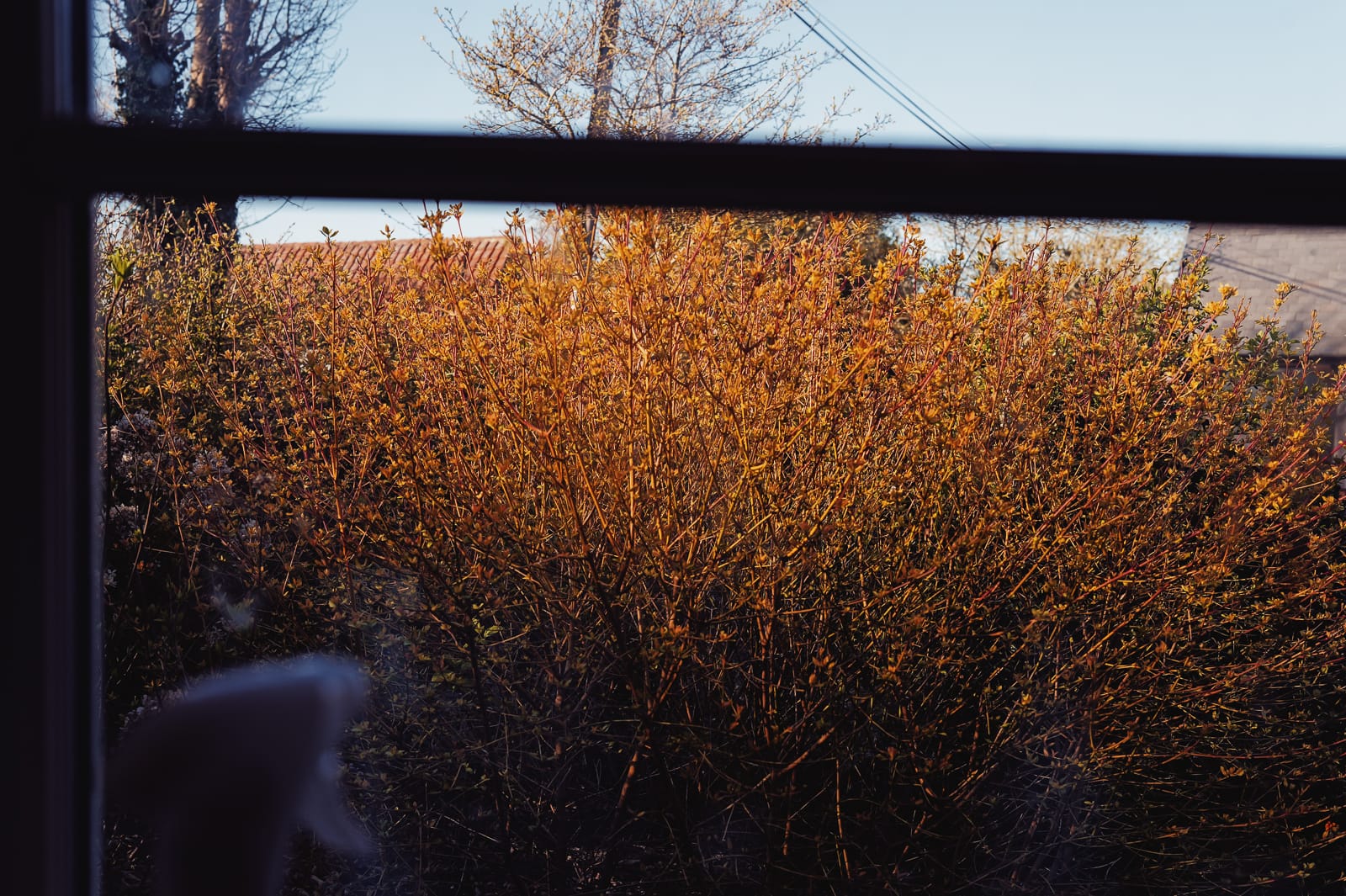
The kitchen window above our sink looks out onto what was formerly an extended part of our gravel driveway. It was not particularly attractive to look at, especially during the British winter when native plants shed their leaves and the view becomes monotonously drab and bleak. The lack of this vista's appeal was compounded by the introduction of our neighbour's new house – a building best enjoyed in the dark.
Inspired by the work of Piet Oudolf whose design philosophy centres on naturalistic, resilient landscapes that prioritise structure, texture and an appreciation of the full life cycle of plants, I set about addressing this design problem.
Oudolf is one of the foremost proponents of the 'New Perennial' movement where gardens are held as evolving, "seasonal performances" rather than as static framing. I appreciate this intent - demanding not only a greater understanding of the lifecycle of the plant and the interplay of species in a planting scheme but also consideration of the impact of the season on the garden's broader context. It's the landscape designer equivalent of Frank Lloyd Wright's organic architecture philosophy. The notion that buildings should blend seamlessly and exist within their site rather than merely sitting upon it.
Given the kitchen window serves as a viewport and frame, I considered how I could screen, add depth and ensure seasonal interest through colour, structure and form. The window faces North so enjoys early morning light from the East and late afternoon sun from the West, the latter screened by the hedge and mature trees beyond.
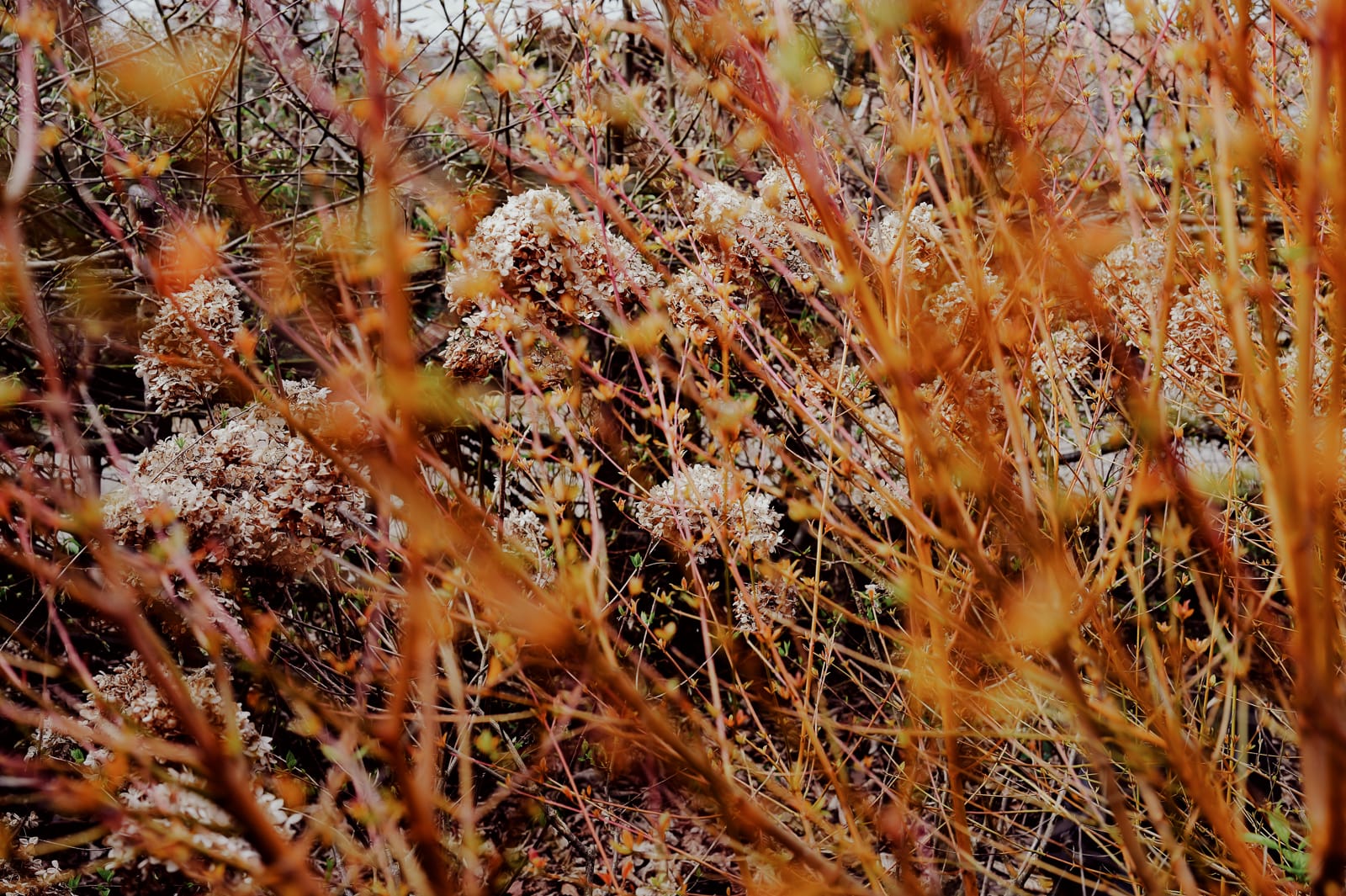
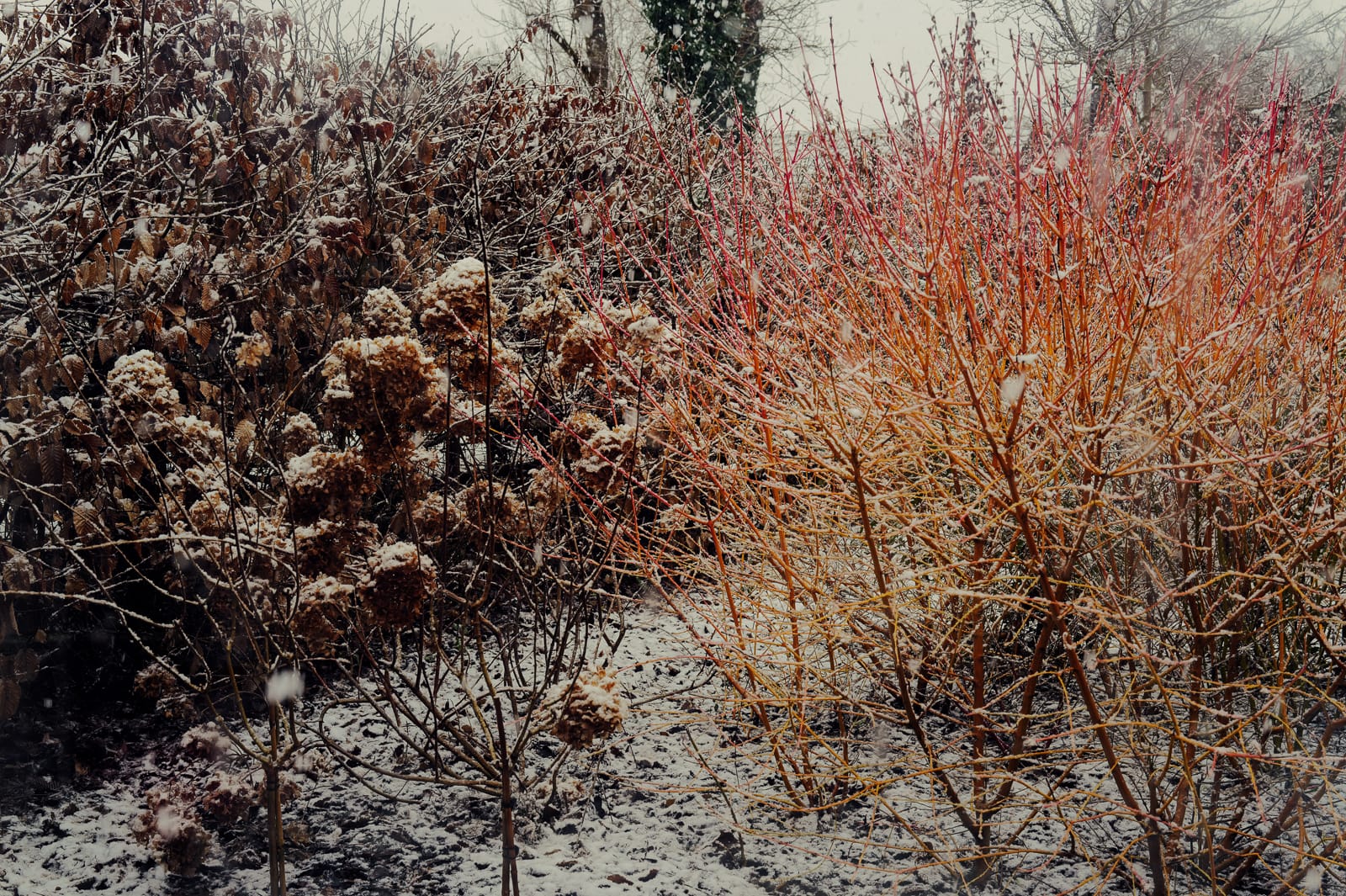
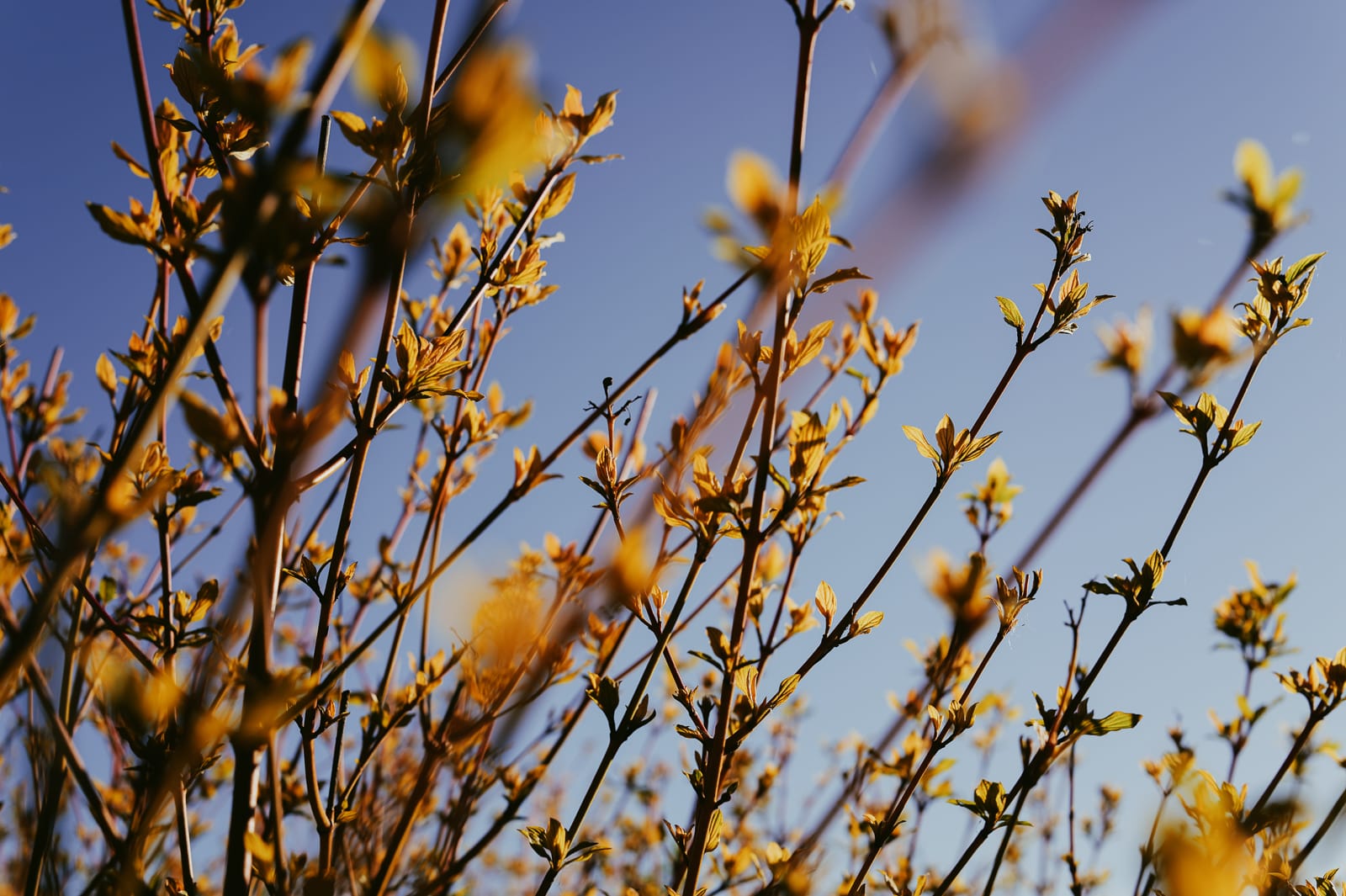
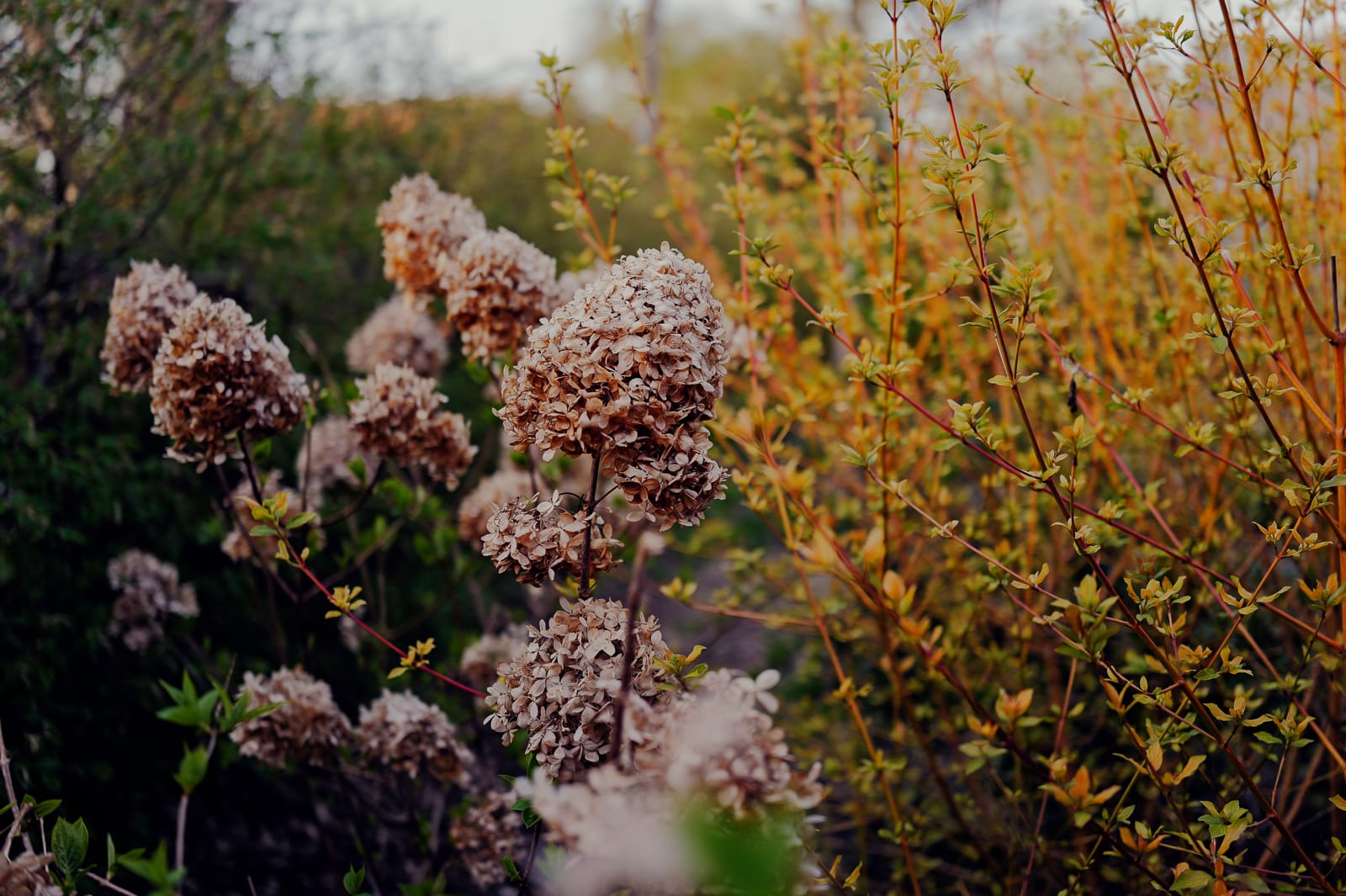
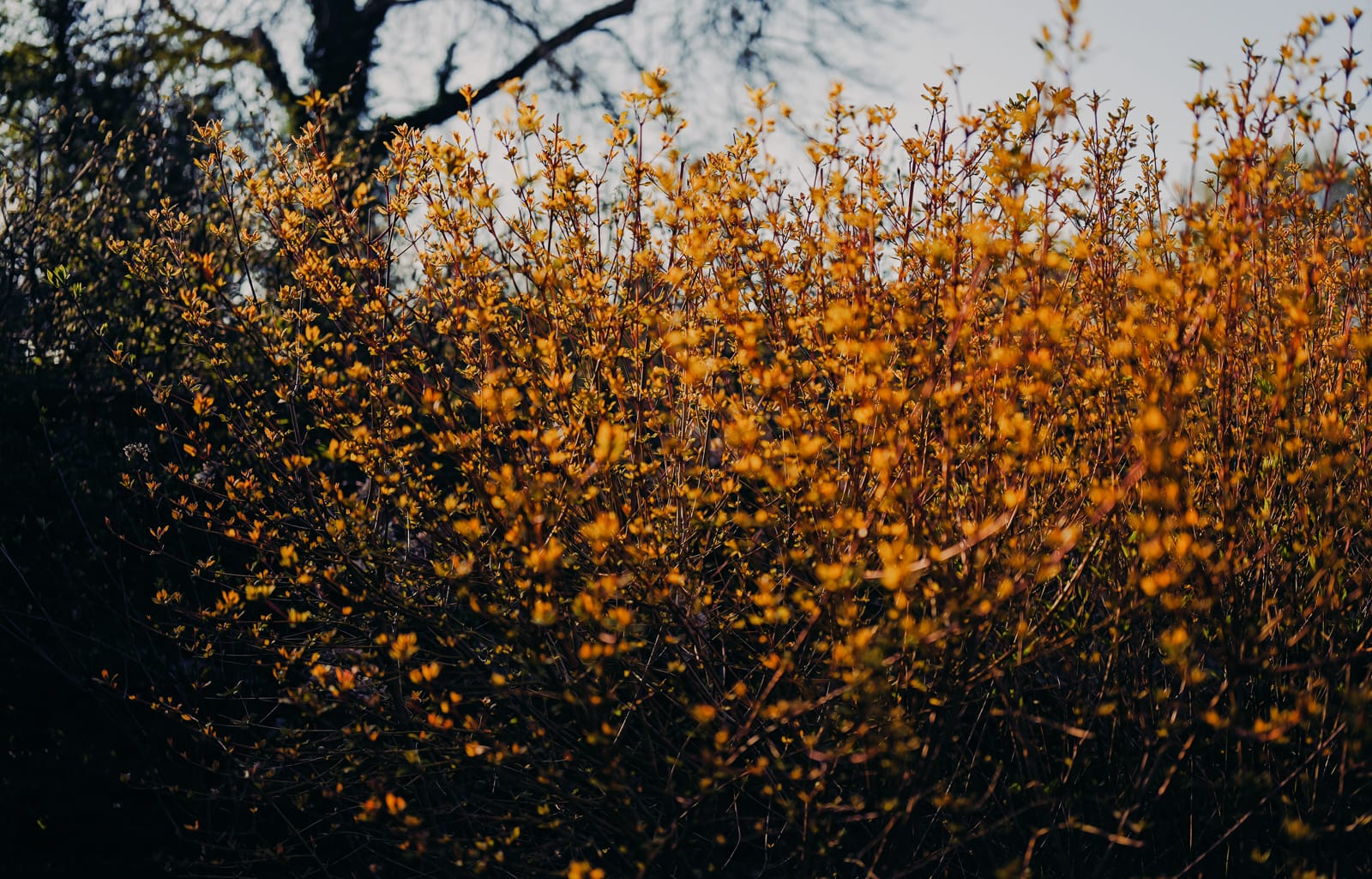
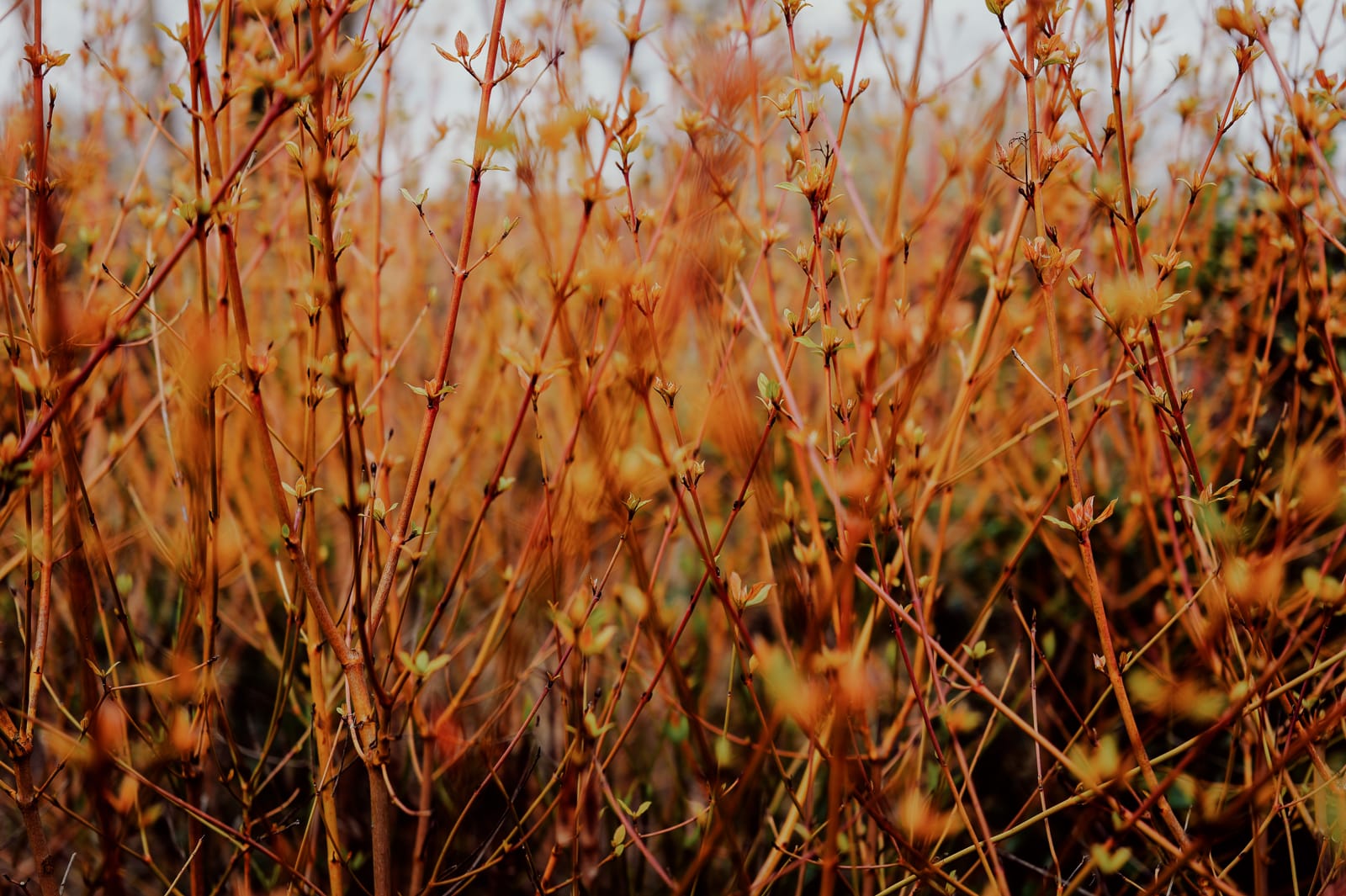
Central to the design is Midwinter Fire, a Netherlands-origin deciduous dogwood. It was chosen not for its flowers but for the drama, structure and winter colour that feels almost painterly. Given the Hornbeam hedge, the area is quite shaded so Hydrangea 'Limelight' was chosen for its lime white flowers and contrast against a sea of homogenous green in summer. The flower heads also create structure and interest over winter and remain in flower until late October.
I decided to set myself a creative challenge of documenting the extent of the design scheme across the season and by creating a design constraint, the frame of the kitchen window, it'll drive more creative images. I'll continue to add images to this post across the year and will compile an edit of four images representing each season.
Planting Scheme
Common Hornbeam (Carpinus betulus), Hydrangea paniculata 'Limelight', Cornus sanguinea 'Midwinter Fire', Broad-leaved cockspur thorn (Crataegus x prunifolia), Darwin's Barberry (Berberis darwinii)