I watched Lee Shulman's Documentary 'I Am Martin Parr' a few nights ago. If you're in the UK, it's on the BBC iPlayer and probably one of the very few things worth watching on the Beeb.
Martin Parr needs little introduction, but if you're unfamiliar with his oeuvre, he was a prolific British documentary photographer, photojournalist and photobook collector. He donated the entirety of his 12,000 title collection to the Tate in 2017 and until his death, promoted emerging, established and overlooked photographers focused on the UK through the Martin Parr Foundation in Bristol.
He is known for his photographic projects that take an intimate, satirical and anthropological look at aspects of modern life, in particular, documenting the social classes of England, and more broadly the wealth of the Western world. He died a few weeks ago on the 6th December 2025.
The 'I Am Martin Parr' documentary is made with affection and much of the criticism of his work is absent. While it feels imbalanced and inherently biased for it, I sense the documentary never set out to be an authoritative critique.
Over the course of his career, Parr has been criticised for voyeurism, mockery and ridicule of his subjects. There have been consistent ethical concerns surrounding exploitation of his subjects and accusations of a degree of cultural insensitivity on the basis that he has played up national stereotypes. His (at times), garish aesthetic and banal subject matter has also been accused of being reductive and trivialising of serious social issues. His consideration for membership of Magnum sparked revolt and pearl clutching amongst its members - several threatened to leave if he was ever accepted. None did. He was their president for four years to boot.
Everyone seems to have an opinion on Parr. I think a lot of the negative commentary is unwarranted. There is intentionality to his work that is often missed in critique. Irony and viewer discomfort creates discourse and allows for construction of broader critique and commentary. When you know the full body of his work, it's much harder to reduce him to just 'kitsch aesthetic'. I am always reminded of the Susan Sontag quote - "Taste is context, and the context is history" when it comes to Martin Parr.
I must confess to not having been a great fan of Parr for a long time. The elevated seaside kiss-me-quick postcard aesthetic of 'The Last Resort' which predominated much of his work was what I was first exposed to in the 90s. But I came to like his work for the depictions of what became my lived experience in the UK. His work on the British seaside is peerless and in so many ways, taking photographs in colour of that aspect of coastal towns quickly feels unintentionally plagiaristic such is his signature influence. I have signed copies of some of his New Brighton work in my kitchen such is my affection for it but I have always preferred Parr's earlier black and white work, The Non Conformists being a favourite.
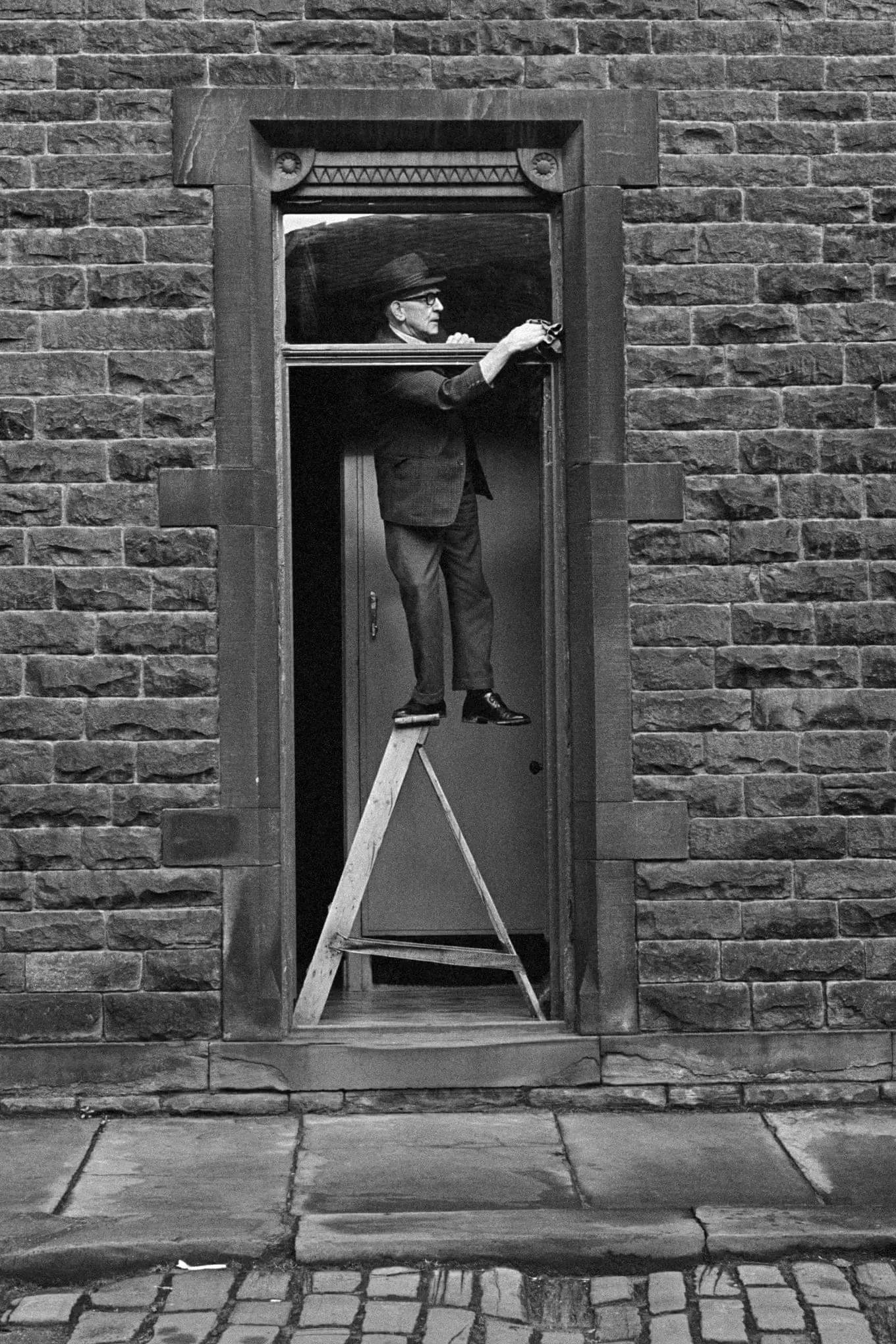
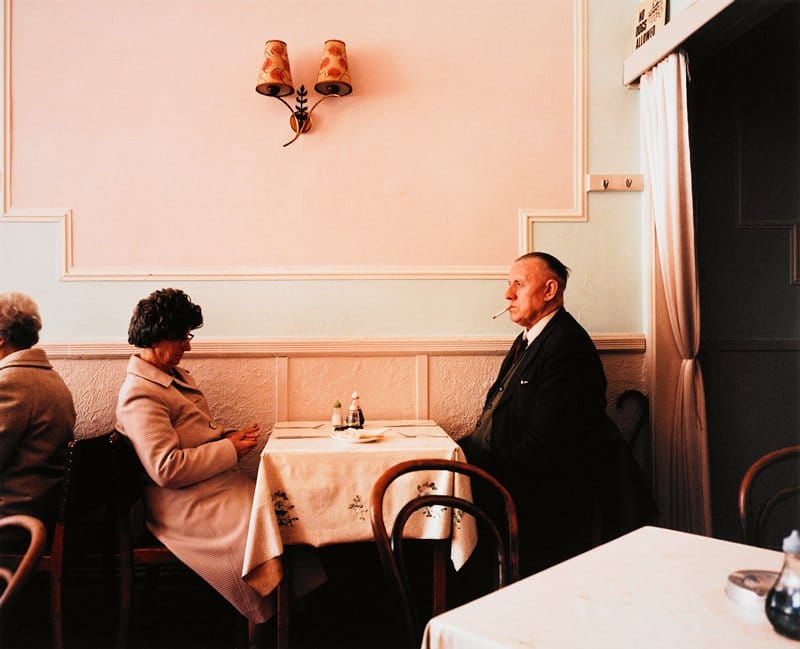
In his later years, due to myeloma, Parr had to use a rollator mobility aid as a result of his treatment and infirmity. What resonates from the documentary is his ease and genial charm. Coupled with the enduring comic image of him, hunched over his walker and perpetually beetling back and forth across frame. A bit like a purposeful dung beetle except this one was in pursuit of his next image.
Beyond his own work, his patronage of the medium has fostered open, often illuminating conversations about photography, many of which can be found on the Martin Parr Foundation YouTube channel. They are well worth engaging with and feature people like Alec Soth and Mark Power together with other contemporary Magnum photographers.
Love him or loathe him, Parr’s impact is undeniable. He helped expand the visibility of photography, championed photographers across generations, and played a significant role in elevating the medium’s cultural standing. That contribution - his influence, advocacy, and willingness to provoke debate - is what he should ultimately be remembered for. And perhaps a little beetling about.
 All Films